Forget everything you think you know about going to the doctor. Living in Mérida, I discovered affordable house calls, same-day lab results, and specialist appointments that last over an hour. Here’s my real experience and how it compares to both U.S. healthcare and Mexico’s IMSS system. I’ve included links and information about ALL of my valuable medical resources!
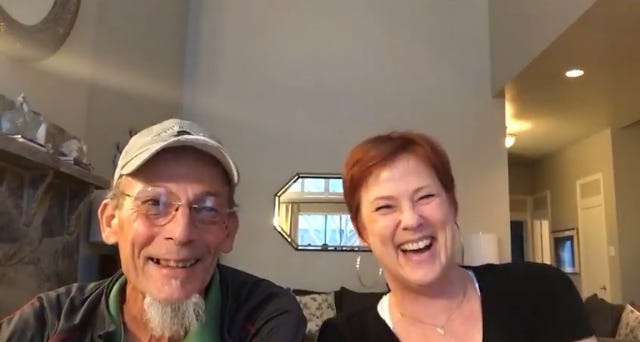
Me and my crazy dad when I was getting ready for my BIG move to Mérida.
The One Thing Nobody Wants to Talk About: Getting Old
Growing up in Slaton, Texas, a small West Texas town of 6,706 people (yes, every single resident counts), full of German Catholic cotton farmers just outside of Lubbock, we kids had a running joke. Never, ever, ever ask anyone over 60 how they were doing. (Drop that age to 50 if you already knew they were grumpy.) Why? Because they would tell you. And, you would be standing there for a solid 30 minutes hearing about their gout, their bowel movements, and their newest heart medication.
But without fail, underneath all of that, there was always always one universal complaint: “I had to spend all day at the doctor’s office just waiting to see the doctor.”
As I got older and moved into my 40s, I started working with more elderly clients. Most of them relocating for the last time, moving closer to family or into assisted living. I’d ask them, “What bothers you most about aging, outside of the obvious aches, pains, and mental changes?” And again, the same answer: waiting in the doctor’s office.
Then came the time I asked my dad. You’ll never guess what he said.
Yep. Same thing.
And now? He’s doing the exact thing he dreaded most; spending hours in waiting rooms. If you knew my dad, you’d understand why that is completely unacceptable to him. And honestly, it should be unacceptable to all of us. He waits two, three, sometimes four hours, only for the nurse to spend more time with him than the doctor does.
The doctor addresses only one issue per visit because that’s how the insurance pays. After all that waiting, he gets maybe 15 to 20 minutes of actual face time. Frustrating doesn’t begin to cover it.
He’ll be 82 in December, by the way. And the cycle just keeps going. One issue resolved leads to another issue discovered, which leads to another appointment, which leads to another wait.
I joked with him that he should stop going to the doctor because they just keep finding new things wrong. But of course, our bodies slow down and stop working the way they should. That’s just the reality.
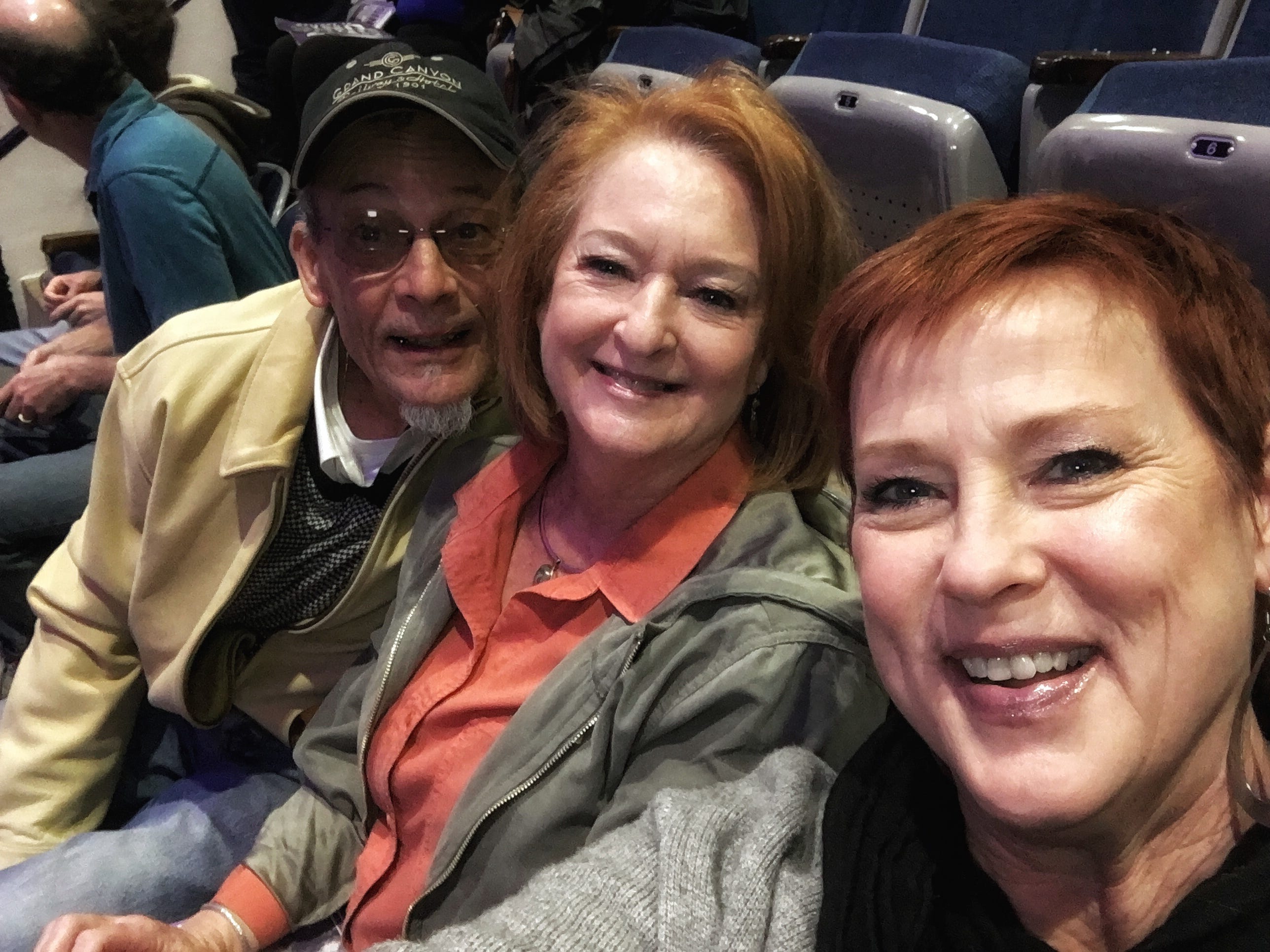
Me, my dad, and his wife Lynn . . . . seen any similarties?
Why I Left and What I Found
Not wanting to end up in that same cycle is one of the main reasons I moved to Mexico at 52. I needed to find a place where I could, as my friend Tonya so perfectly puts it, age in place. Check out her Instagram: Outloud Aging
A few months after arriving, I needed a doctor for the first time. I did what we all do: I went to social media and started digging through recommendations in one of the private expat groups I’m part of. Dr. José Azcorra came up again and again. He spoke English, which I desperately needed at the time. I sent him a message — directly, on WhatsApp +52 999.297.4394. He replied quickly, said he could see me the following day.
Then came the part that made my jaw drop.
He could come to my house.
I’m sorry . . . what? A doctor who makes house calls? In this day and age? I couldn’t believe it. For about $50 USD, he would come to me, make his diagnosis, and recommend any additional testing I might need. Bloodwork, labs, urinalysis all arranged from the convenience of my own home, and all at an equally reasonable cost.
A quick sidenote on insurance: After my divorce, I had to choose between health insurance and eating. That was my actual reality at the time. I haven’t had insurance since 2010 (until a couple of years ago), This was partly due to affordability and partly because too many pre-existing conditions made qualifying nearly impossible. The insurance I did have before my divorce didn’t even cover what I actually needed: a hormone prescribed after my hysterectomy, acupuncture (which I’m a huge fan of), or even basic yearly checkups. This is what my dad calls “maintenance.”
If you’re looking for a great insurance broker who represents all lines including health, home, auto, and more. I recommend Pati Sales with Expat Insurance highly. What I appreciate most about Pati is that she will not over-insure you or try to sell you something that isn’t in your best interest.
To get a no-obligation quote, start the process by filling out this form.
Back to Dr. Azcorra. I needed several studies done like a CBC and urinalysis. The final cost came to about $80 USD total. The results arrived in a couple of days, sent directly to me on WhatsApp, which I then forwarded to Dr. Azcorra. He made his final diagnosis and sent my prescription via WhatsApp.
I went to the pharmacy. Farmacias Guadalajara and Farmacias del Ahorro are my personal favorites. I spent about $20 USD to fill everything. And here’s something that surprised me: your prescription stays with you. You can refill it at any pharmacy, at any time, as needed.
My mind was B-L-O-W-N. Completely and utterly blown. How had I ended up in this place where I have direct access to a doctor who makes house calls, lab technicians who come to my home, and affordable access to medication? I had no idea when I moved here that this was even possible. Now I count it as one of the biggest perks of living in Mérida.

Angel’s Story: Navigating Specialist Care
Now let me tell you about Angel.
He’s had chronic upper back pain for years, aggravated by an injury a few years ago. Growing up with twelve brothers and sisters, you can only imagine what his body has been through. We tried the usual approaches: physical therapy, a TENS machine, Pilates.
Pilates helped the most when we found an amazing private Pilates instructor Shannon Murray - if you’d like to inquire for pricing and availability, reach out on WhatsApp (she’s fluent in English and Spanish) +52 999.486.8713. The stretching exercises with her guidance gave Angel a huge amount of relief. The only issue was availability with his work schedule.
But recently, the pain has flared up again since he went back to work at La Tratto Santa Lucia. (Ask for him by name if you ever go, he’s wonderful!) Being a waiter means carrying heavy trays and being on his feet all day, which hasn’t helped.
I went down my usual rabbit hole. You know you do it too. Social media, Google, and Doctoralia (an app I use regularly and highly recommend). First, Angel saw a sports orthopedist. Fancy office, affordable consultation at $800 MXN, quick to get an appointment. The doctor spent about 30 to 40 minutes with him, prescribed some medication, and said to come back if the pain didn’t improve. It wasn’t the solution we were looking for.
Back down the rabbit hole I went, and I found Dr. Antonio Esparza. He’s popular among expats. With a main clinic in Chelem, he comes to Mérida on Tuesday evenings (yes, evening appointments . . . let that sink in). We were booked for 6:00 PM the following week. He can be reached via his office Centro Medico Esparza at +52 999.115.1878. His staff does not speak English but he does.
The bad news: We waited exactly seven minutes because he’d been caught in a bit of traffic. We were the first appointment of the evening. The good news: Dr. Esparza spent one hour and twenty minutes with Angel. It was the most thorough exam Angel has ever had. Right there in the office, he performed ultrasound imaging.
No need for a separate appointment, no separate radiologist, no waiting for someone who couldn’t even discuss the results with us. And no extra charge. The total cost for everything was $900 mxn ($52.23 usd). The imaging results arrived via email two hours after we left.
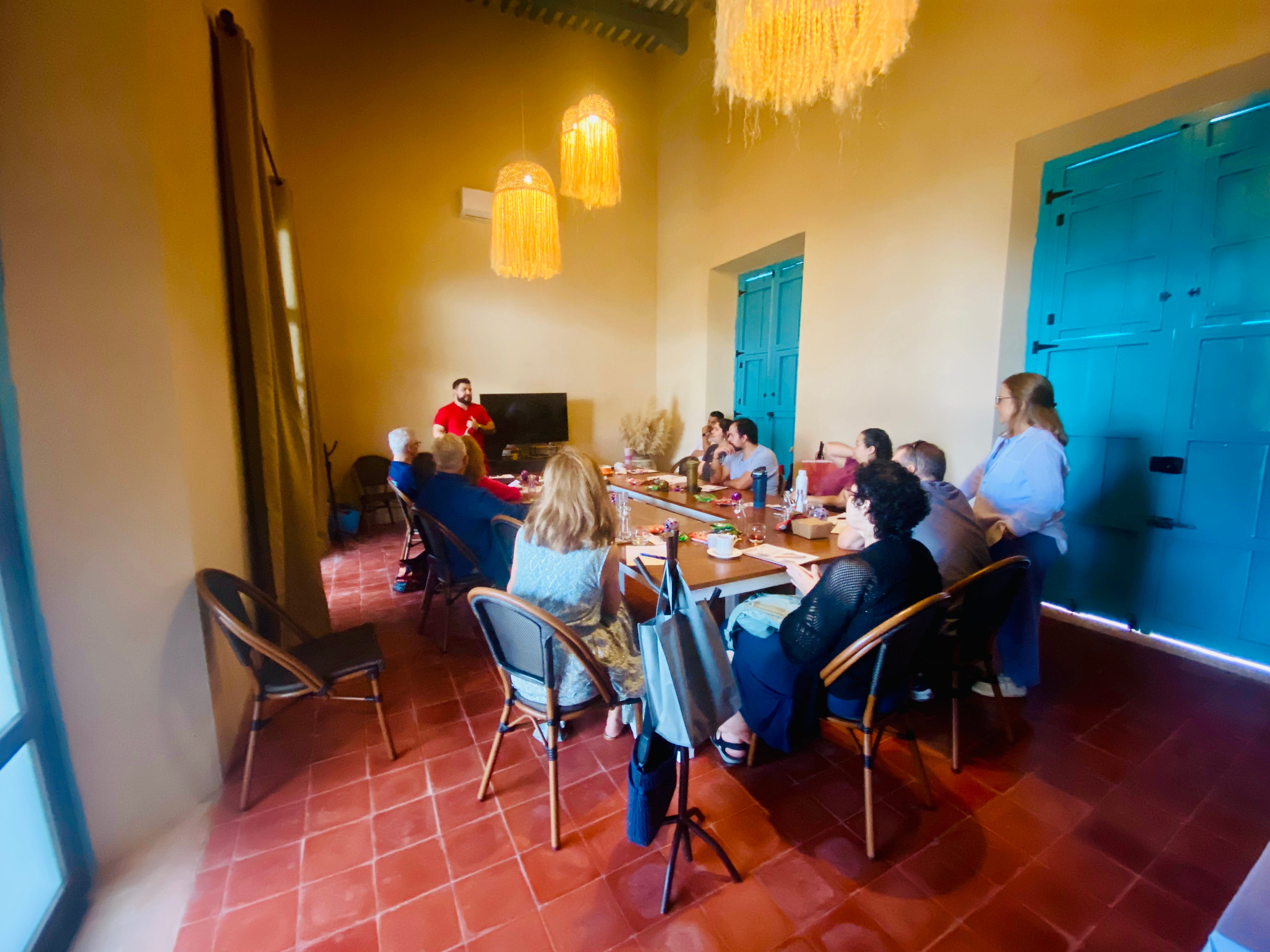
The amazing Dr. Azcorra speaking to one of our Scouting Trip groups.
Chopo: Imaging and Labs Without the Drama
Because of the chronic nature of Angel’s pain, Dr. Esparza recommended a deeper He recommended scans of two different areas and suggested we go to Chopo. Chopo is an imaging and laboratory chain with locations across the city. Some handle only lab work; others are equipped with more advanced imaging equipment.
We went to Chopo Altabrisa. Angel called ahead to confirm they had the specific equipment needed, and the receptionist helpfully gave him a list of nearby Chopo locations in case another was more convenient. There was one closer to home, but it didn’t have what we needed. We went in person to make an appointment and get a cost quote.
Now, please sit down before you read this next part.
One study cost $805 MXN (approximately $46.68 USD). The other cost $526 MXN (approximately $30.50 USD). The grand total: $1,332 MXN (about $77.18 USD).
The whole process of paying and scheduling took fifteen minutes. We had an appointment for 7:00 AM the following morning.
The next day, we arrived around 6:45 AM. Angel was checked in and called back by 7:25. By 7:37, we were walking out the door and heading to his favorite torta spot on the way home. And at 9:51 AM, roughly two hours after his appointment, the results were in his email.
Shocking, isn’t it?
The Numbers at a Glance
Dr. Esparza
Appointment availability: 1 week (sooner if we’d traveled to Chelem, about an hour away)
Wait time: 7 minutes
Duration of appointment: 1 hour, 20 minutes
Cost: $900 MXN ($52.23 USD)
Chopo Altabrisa
Appointment availability: 1 day
Wait time: 25 minutes
Duration of scans: 10 minutes
Results: 2 hours
Cost: $1,332 MXN ($77.18 USD)
Entire Process
Total days from first appointment to final results: 3 days
Total wait time: 32 minutes
Total time in appointments: 1 hour, 36 minutes
Results turnaround: 2 hours
Total cost: $129.41 USD
What About IMSS?
You might be wondering: does Angel have IMSS, Mexico’s national health insurance? The answer is yes. And with IMSS, those same studies and appointments would have been free.
But here’s what “free” actually looks like in practice because I’ve been through this process with him.
Day 1 Arrive at your nearest IMSS clinic at 4:00 AM. Yes, 4:00 in the morning. You must be registered at your current address with IMSS, and you stand in line with others. This is usually a long line, until the clinic opens at 8:00 AM. At that point, you hope you arrived early enough to see a general practioner. If not, you’ll need to come back the next day. Assuming you do get in, you’ll see the doctor for a preliminary diagnosis. They’ll refer you to a specialist at a different facility.
Day 2 (or so) Visit the specialist location to find out about appointments. Best case: you can schedule in advance. Worst case: you’ll be standing in line again at the crack of dawn. The wait for a specialist can range from three weeks to three months, or even longer in some cases.
Week 6 In Angel’s case, it was six weeks. If you’re not able to get an advance appointment, you’re back in line as early as possible; again hoping to get in before the day fills up. For Angel’s June appointment, it was in a government clinic with the waiting room in an outside, covered corridor. No air conditioning, limited seating, and thankfully open on one side but it barely helped with the stagnant hot air and heat in June.
Once you see the specialist, they may prescribe medication:
available at the on-site pharmacy
free if it’s in stock
out-of-pocket in a regular pharmacy if not
If they order lab work or imaging, the same process repeats:
different location
early arrival
stand in line
hope for the best
I’ll spare you the rest of the details, but here’s the bottom line: Angel’s entire process through IMSS for the same chronic upper back pain took approximately eight months.
Eight months for free versus three days for $129.41 USD.
(One note for expats: IMSS isn’t entirely free for foreigners. There’s a nominal annual fee to enroll. Pati Sales can provide a quote and help with registration if you’re interested. Fill out this FORM to get started.)
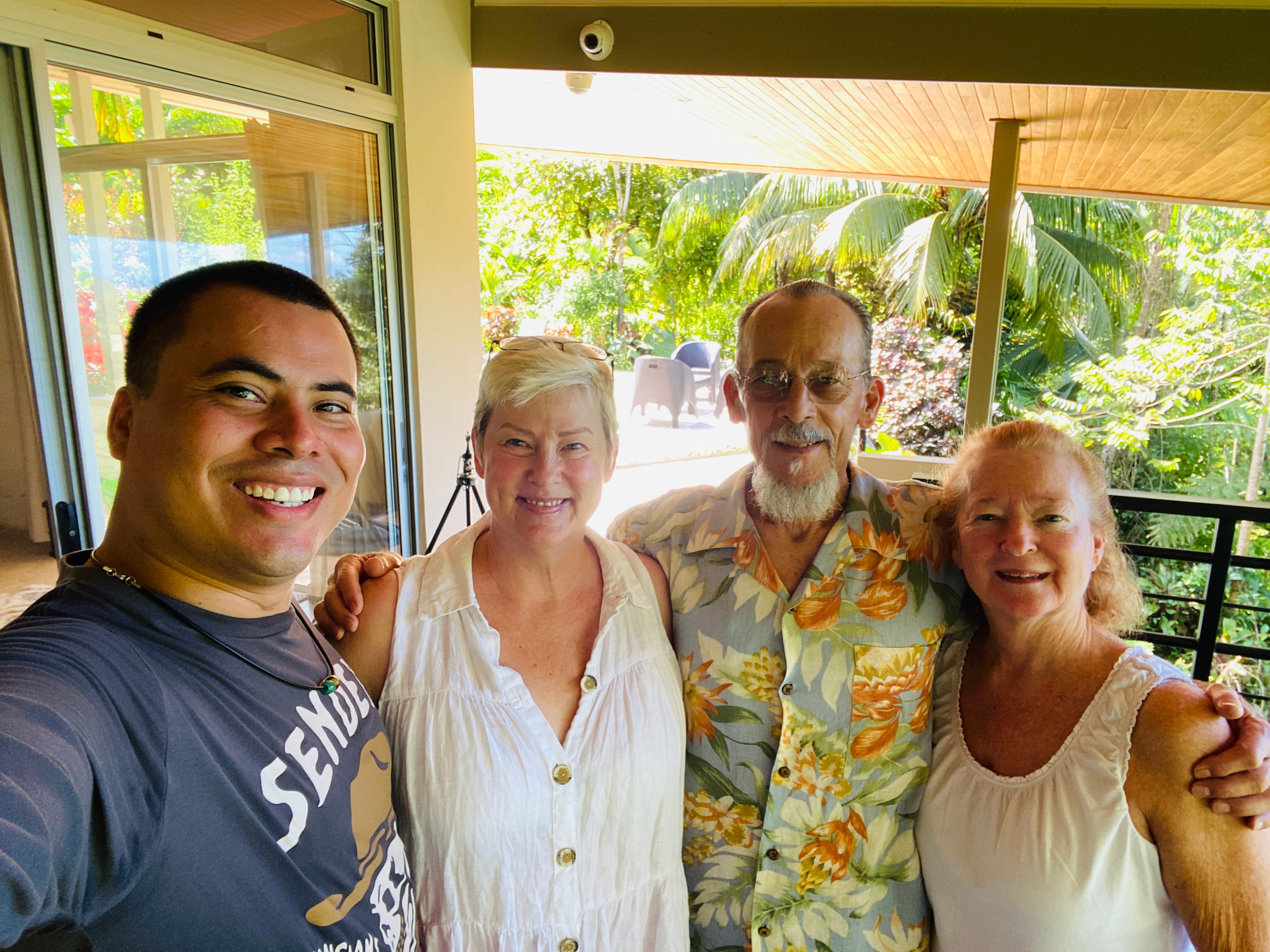
Angel and I visiting my dad and his wife Lynn at their house in Ojochal, Costa Rica.
What This All Means
I want to be clear: I’m not here to tell anyone what to do with their healthcare. IMSS works for many people, and for those with the time and patience to navigate it, it can be a safety net BUT you’ll need help and lots of it. As someone who moved to Mérida partly to find a better way to age and who spent years without any insurance at all. What I’ve found here has been nothing short of extraordinary.
House calls.
Direct communication with doctors via WhatsApp.
Lab techs who come to you.
Same-day appointments with specialists who actually spend time with you.
Imaging results in two hours.
All of it at a fraction of what any of it would cost in the U.S. with or without insurance.
When I moved here, I had no idea the depth of care, availability, and affordability that was waiting for me. At the end of the day, it feels like what medicine was always supposed to be: practiced for the patient, not for the insurance company.
In another post, I cover what to do in the event of a medical emergency in Mérida. Yes, 911 is available here, but it’s not quite what most of us are used to. Stay tuned.
Your Mérida Insiders,
Amy Jones, The Mérida Ambassador
Angel Rodriguez, The Local Insider
Founders, Life in Mérida™
🧳 Planning your next trip? Download our Free Visitor’s Guide to unlock insider itineraries, maps, and local secrets. Visit our website and find more articles on our Substack channel