


Exploring the neighborhoods in Mérida is still one of my favorite things to do. The pastel facades, the wrought-iron balconies, the centuries-old colonial architecture, the way late-afternoon light changes the look and feel of the city.
Mérida is genuinely magical, and I’m so glad you’re discovering it.
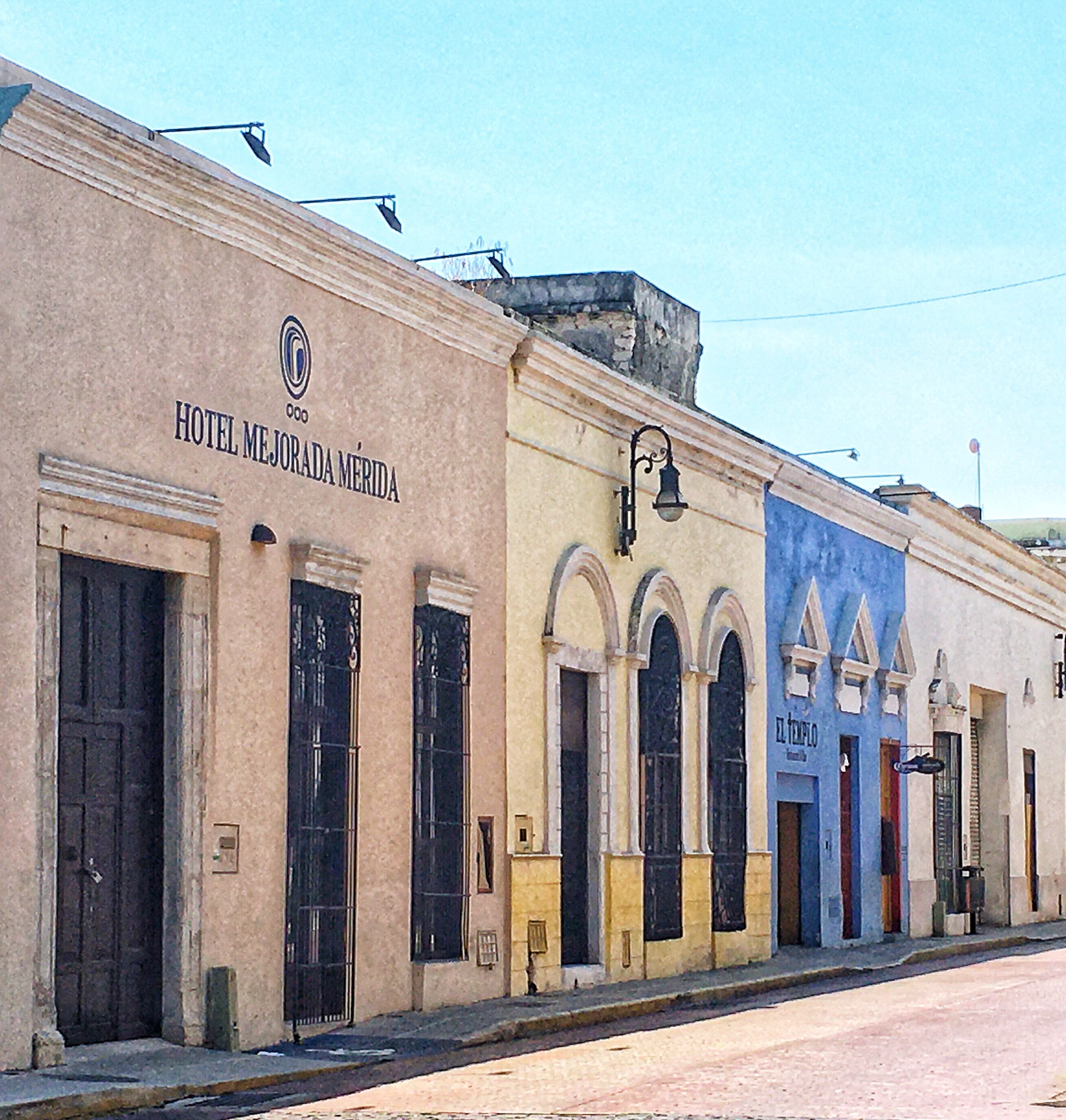
Why Mérida Wins Hearts
Before we walk through the neighborhoods in Mérida one by one, here’s why so many of us have fallen in love:
Higher quality of life
Surprisingly low cost of living (yes, believe it or not, we can show you)
Wonderful tropical climate
One of the safest cities to visit in Mexico
One of the safest cities to live in Mexico
Add in the community-first culture. Neighbors actually know each other, and life still revolves around the local park and church. You have a city that feels both rooted and welcoming.
How Mérida Is Laid Out
The first thing to understand about the neighborhoods in Mérida is that the city is built on a grid, with mostly numbered streets.
A few orientation points:
Numbered streets make up the bulk of the grid. Even numbers run north and south. Odd numbers run east and west.
Larger avenues are named such as Avenida Cupules, Avenida Itzaes, or Avenida Colón.
Paseo de Montejo is the main north–south boulevard cutting through the city center. It becomes the Prolongacion Montejo as you travel north from the Monumento a la Patria.
Circuito Colonias is the loop that circles the middle of the city.
The Periférico is the loop highway that circles the outside city.
Spend a few minutes with a map and you’ll start to see how the colonias (traditional neighborhoods) and fraccionamientos (planned subdivisions) fit together.
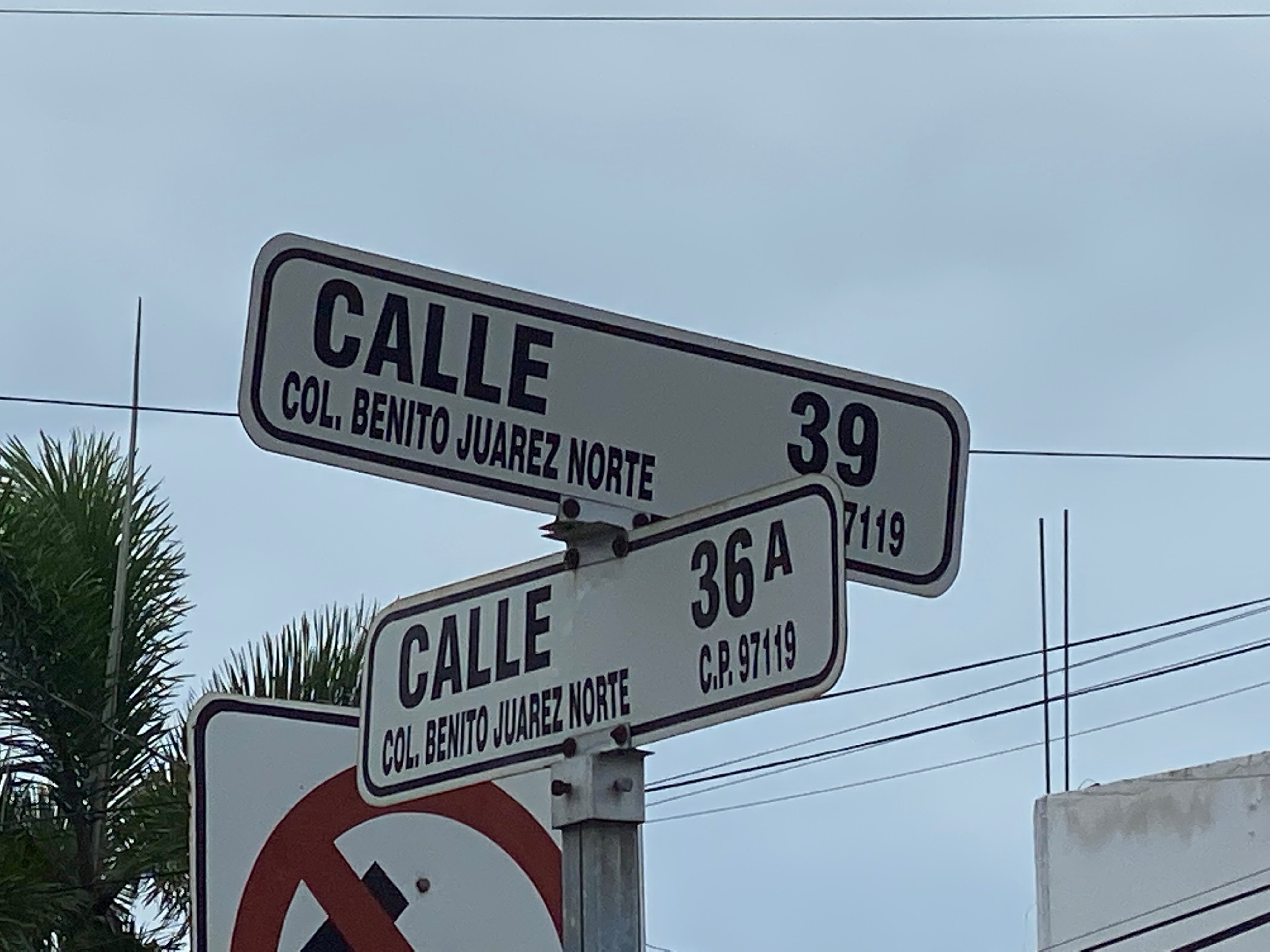
Colonias vs. Fraccionamientos: A Quick Primer
Most colonias have a church and a park at their heart. Very often, the church, neighborhood, and park all share the same name. Look at the street signs to figure out which colonia you’re in; the name is usually right under the street number or name.
A fraccionamiento, on the other hand, is a planned development more like a type of subdivision. Similar sized lots, some houses look very similar, avenues and streets are definitely in grid-form.
As you head to The North, you’ll notice the architecture and the rhythm shift dramatically. We call it “anywhere U.S.A.” due to the car dealerships, big box stores, and the way businesses are organized throughout the area.
All neighborhoods in Mérida have their charm; they just tell different stories.
The Heartbeat: Plaza Grande and Centro
All the neighborhoods in Mérida radiate out from one spot. This is the historic city center, anchored by Plaza Grande and the Catedral de San Ildefonso.
The buildings surrounding the plaza, sometimes referred to as the Zócalo, include:
Catedral de San Ildefonso
Palacio de Gobierno (Governor’s Palace)
Casa Montejo
MACAY Museum
Olimpo Cultural Center
The Ayuntamiento (City Hall)
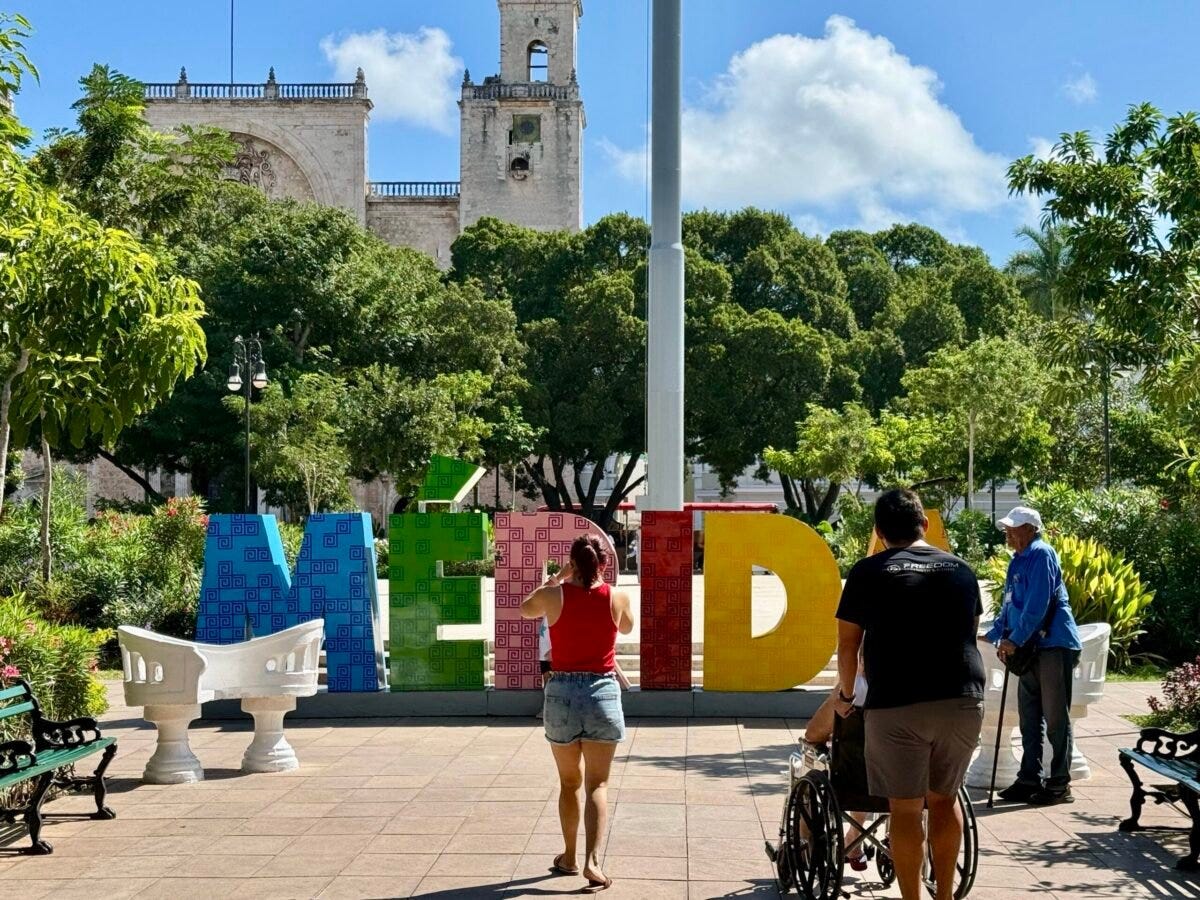
Plaza Grande is where you go to feel the pulse of the city. People gather to read the paper, get a shoeshine, feed the pigeons, sing, dance, sell trinkets, or just sit on a confidente bench and people-watch. There are coffee shops, restaurants, newsstands, and shops on every side.
Features of Plaza Grande
Pok Ta Pok (Mayan Ball Game): In front of the Cathedral. A reenactment of the ancient Maya ball game, full of ceremony and mysticism.
Mérida en Domingo: Calle 60, between Plaza Grande and Parque Santa Lucía. Sunday-carnival energy with food stalls, artisans, performers, and folkloric dance.
Vaquería Dancing: Palacio Municipal, Plaza Grande. A colorful tradition from the colonial era, when the wives of local cowboys (vaqueros) would lead their husbands through elaborate dances in their finest dresses.
Video Mapping on Casa Montejo: A high-tech light-and-sound show that uses the facade itself as a canvas for the region’s history.
Free Walking Tour: Tourism Office, Calle 62 between 61 and 63. Available in English and Spanish. Highly recommended.
Be sure to download our FREE Visitor’s Guide
The Champs-Élysées of Mérida: Paseo de Montejo
Named for Francisco de Montejo, the Spanish conquistador who founded Mérida in 1542, Paseo de Montejo is the grand boulevard running north–south through the city. Think Paseo de la Reforma in Mexico City or the Champs-Élysées in Paris but with palm trees, mansions, monuments, and that unmistakable European influence.
The Paseo officially begins at Calle 47 (an area called the Remate) and runs north to the Monumento a la Patria at Calle 27A. Beyond that, it continues as Prolongación Montejo all the way out to the Periférico.
What’s Happening on the Paseo
Noches Mexicanas: At the Remate, every Saturday night. Artisans, food vendors, music, and dancing.
BiciRuta: Sunday mornings. The east side of Paseo de Montejo closes so people and pets can bike, walk, skate, and chat their way down the boulevard.
Artists on the Paseo: Sundays until early afternoon, on the east side of the Paseo. Artists, creatives, pop-up markets, and street food.
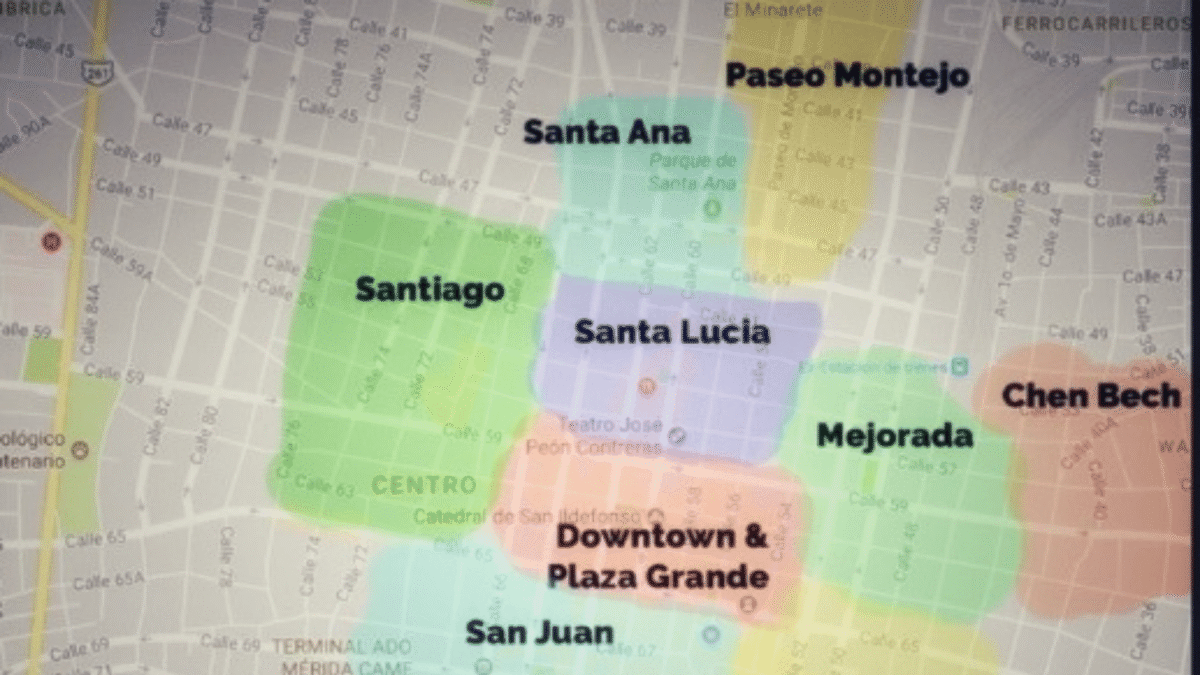

The Centro Colonias You’ll Want to Know
The action lives in Centro: restaurants, museums, galleries, churches, parks, tourism offices. If you want to walk among locals, expats, and visitors at any hour, these are the neighborhoods in Mérida to wander:
Santa Lucía · Santa Ana · Santiago · San Juan · San Sebastián · Ermita · Mejorada · García Ginerés · Itzimná · Alemán · Jesús Carranza · Chen Bech
You’ll see colonial-style homes in every conceivable state of remodel. Some pristine, some still holding onto their century of patina. Let’s walk through them one at a time.
Santa Lucía
The colonia closest to Plaza Grande, Santa Lucía has played a starring role in Mérida’s story for centuries. Locals and visitors gather here for music, dance, and that particular Yucatecan magic. (Please pronounce Lucía: loo-see-ah. Many want to give it the Italian pronunciation: loo-chee-ah. This is wrong and locals won’t understand you.)
The obelisk in the park is dedicated to General Sebastián Molas, built in 1878. Its tip is intentionally broken; a symbol of his shortened life. The original inscription reads (in translation): “Here lie the remains of Colonel Sebastián Molas, Hero of the Caste War.”
What to catch in Santa Lucía:
Yucatecan Serenade: Thursdays, 9 p.m. Live music, traditional costumes, and history under the open sky. This magical event started in 1965.
Local Vendor Market: Sundays, 11 a.m. Hammocks, jewelry, food, traditional clothing.
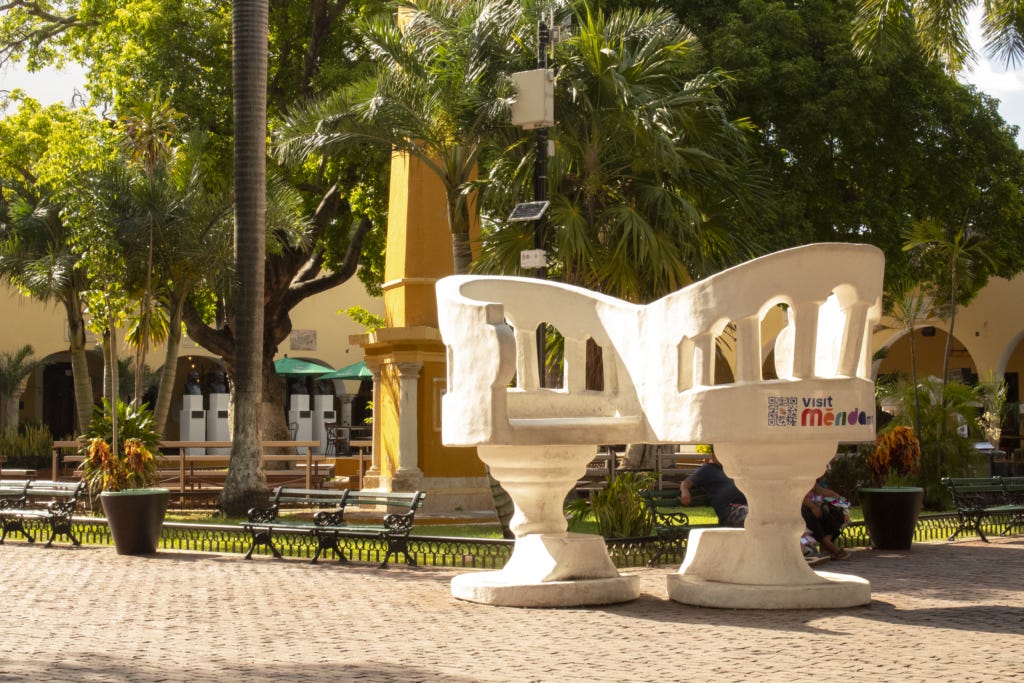
Santa Ana — Calle 60 y Calle 47
You’ll spot Santa Ana’s church by its pyramidal spires and raised platform. Built atop a former Maya temple base. In the 1700s, this was the northernmost barrio of colonial Mérida, home to a large indigenous Maya and mulatto population.
Today, Santa Ana is one of Mérida’s growing art districts, with galleries, museums, and a charming neighborhood market full of cocinas económicas (small kitchens) serving traditional Yucatecan dishes and fresh juices. On the corner of the Santa Ana block where the church and market are located, Calle 47 connects to Paseo de Montejo.
The Christmas season is when Santa Ana truly shines with fairy lights forming a canopy across the plaza. The whole park feels enchanted and magical.
Santiago — Calle 72 y Calle 59
Santiago Church was founded in 1637, making it one of the oldest in the city. Three or four centuries ago, this was the colonia of the indigenous Maya, the artisans, and later the German community. Before Paseo de Montejo was built, Santiago was the place to live in Mérida.
The Santiago Market is one of my personal favorites with fresh fruit and vegetables, eggs, flowers, juices made on the spot, a great butcher counter, cocinas económicas, a tortillería. The park itself has a beautiful fountain and plenty of shade.
Don’t miss:
Remembranzas Musicales: Tuesdays, 8:30 p.m. Cha-cha, mambo, salsa, and big-band live music under the stars. One of the loveliest nights in the city.
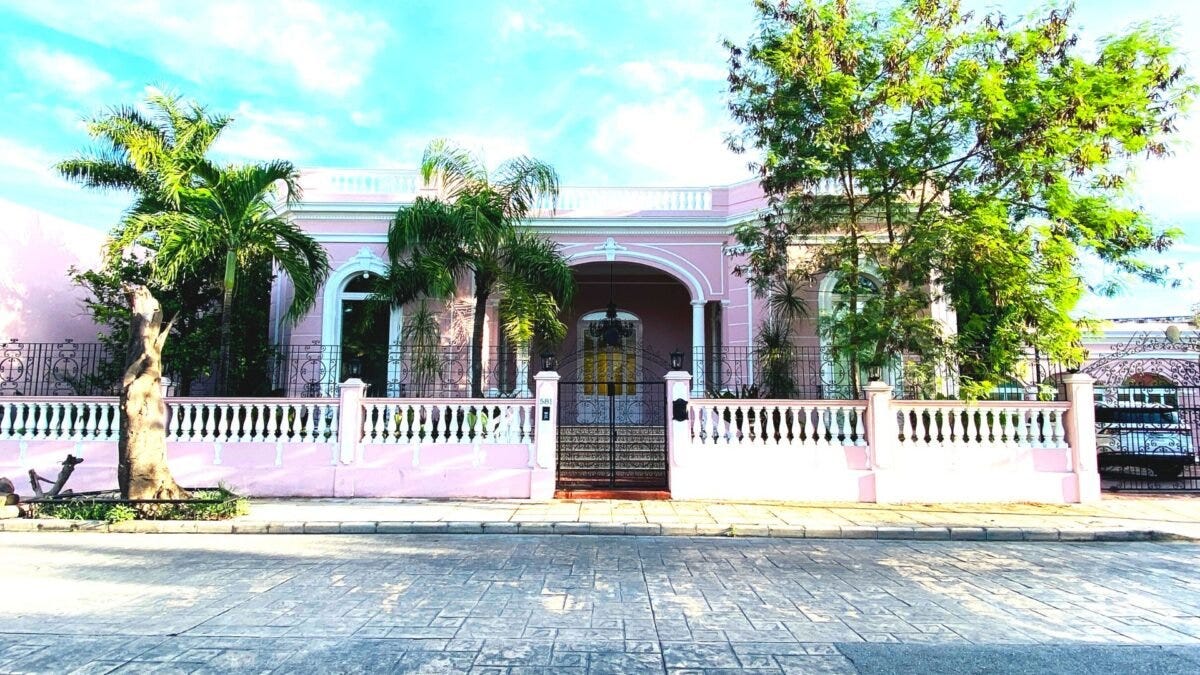
San Juan — Calle 69 y Calle 62
San Juan’s church, four blocks south of Plaza Grande, is my personal favorite of all the churches in Mérida. The church dates to 1770, painted a magnificent yellow that practically glows at golden hour.
The San Juan arch marks one of the most significant historical gates to the city, rebuilt in 1790 under Governor Lucas de Gálvez y Montes de Oca (the same Lucas de Gálvez of Mérida’s largest market).
In the park, look for the bronze statue known as “the Little Black Girl of San Juan.” This is a tribute to the lantern bearers who once kept the peace, calling out: “It’s twelve o’clock, and all is serene.” (I love these little fragments of history. They’re the connection that makes a city feel alive.)
In 1810, the church’s chaplain, Don Vicente María Velásquez y Alvarado, became the spirit of the San Juanistas; credited with the very first stirrings of Mexican Independence.
Mark your calendar:
Paseo de las Ánimas: During the last week of October and a vital part of Hanal Pixan (Día de los Muertos). The procession begins at the General Cemetery, passes through San Juan Park, with painted-skull faces, traditional Yucatecan dress, music, and food and continues until Parque La Plancha.
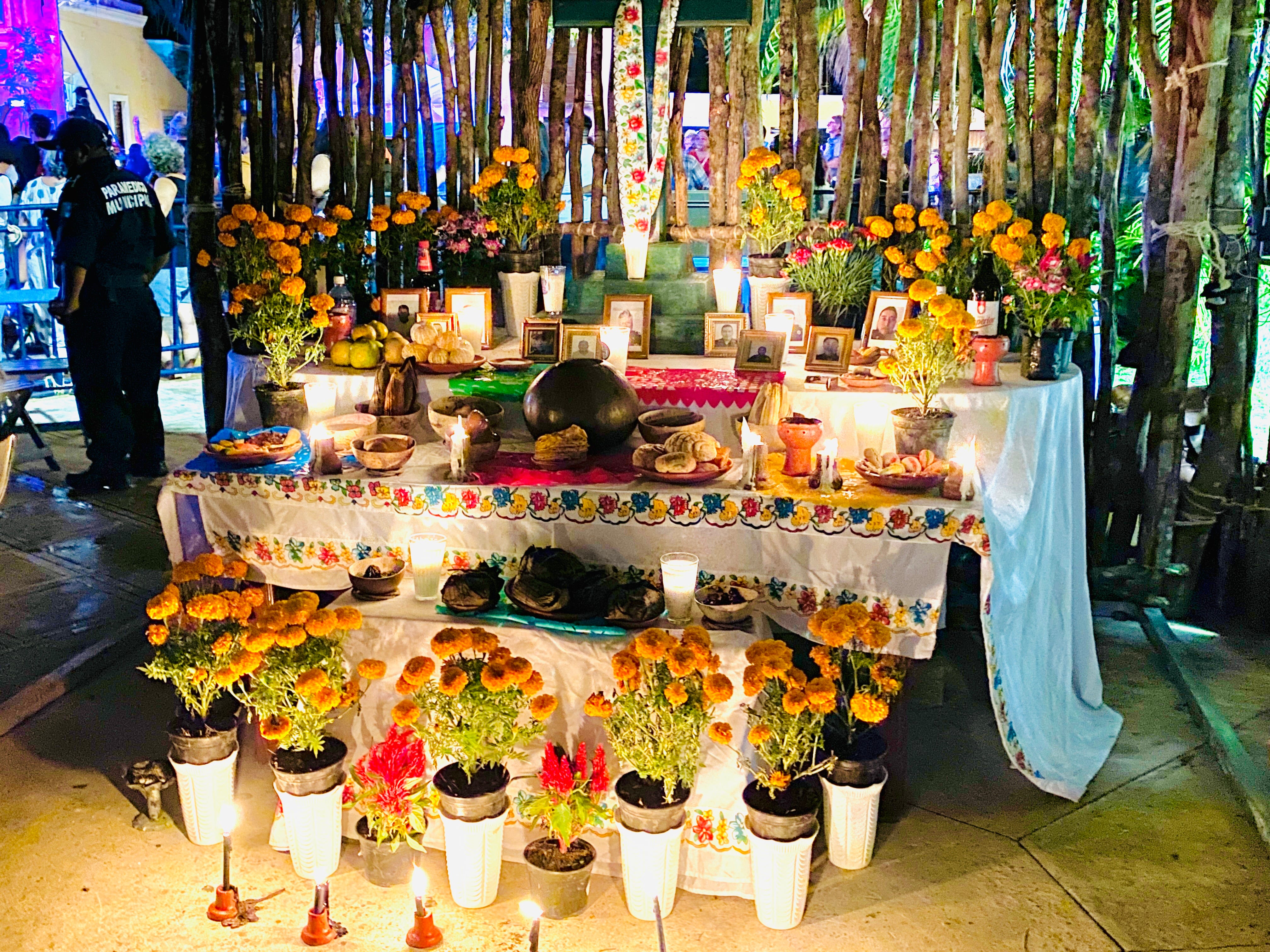
San Sebastián — Calle 75 y Calle 72
In colonial times, this was land granted to Francisco de Montejo’s son. To make room for Spanish estates, the indigenous Maya were relocated here. For centuries, San Sebastián housed Mérida’s poorest residents.
By the early 20th century, it had a tougher reputation known as Barrio Bravo, where young men from rival barrios fought one another. Local lore says the iron fence around the government offices on Calle 75 was forged from the muzzles of rifles repurposed after the Mexican Revolution. (True or not, it’s the kind of story you can’t help but be fascinated by.)
Today, San Sebastián is famous for its fairs. Booths, penny arcades, sometimes Ferris wheels and merry-go-rounds, there’s almost always something happening near the park.
The most popular event:
Invocation of Our Lady of the Assumption: From August 3–15, you’ll find voladores (homemade bottle rockets), papier-mâché bulls, music, food, rides, and more.
La Ermita de Santa Isabel — Calle 66 y Calle 77
Often shortened to Ermita, this church was originally built in the 1700s as a wayfarer’s shrine. It’s dedicated to Nuestra Señora del Buen Viaje or Our Lady of the Good Journey, similar to Saint Christopher. The faithful would stop here to pray before setting off west to Campeche; a genuinely dangerous trip in those days.
Just across from the park, look for a wooden door tucked into a wall. Behind it is a small garden with native Yucatecan plants, ferns, flowers, and trees. Entry is free, but access is limited. If the door is open, peek in and ask. Some say the garden has ghosts.
The park itself was renovated recently with a new playground, fresh paint, and signage announding Ermita as a Barrio Magico (magic neighborhood). The streets around Ermita were just repaved with the original bricks. Here’s an interesing fact: most people will tell you those bricks came from Europe. They didn’t. They were manufactured in Cincinnati, Ohio, and brought down.
Mejorada — Calle 50 y Calle 57
Mérida’s first hospital was built in Mejorada in 1562. Between 1688 and 1694, the Franciscans built two churches and convents here. One has disappeared; the other, La Mejorada, still stands today and now houses the UADY Faculty of Architecture. The adjoining building, the Dragon Cavalry, was once the headquarters of Mérida’s military garrison.
In the park, look for the bronze sculpture honoring the Niños Héroes de Chapultepec. There’s no neighborhood market but there are events, plant, and pop-up markets. Starting June 25, Distrito Mejorada is a vibrant pedestrian cultural and market hub. A must visit.
The massive Mercado Lucas de Gálvez is just a few blocks south, and you absolutely must visit it at least once. If you ever need to move furniture, head to the east side of the square. That’s where the men with trucks gather called “fletes.” On the west side, you’ll find the famous Los Almendros restaurant.
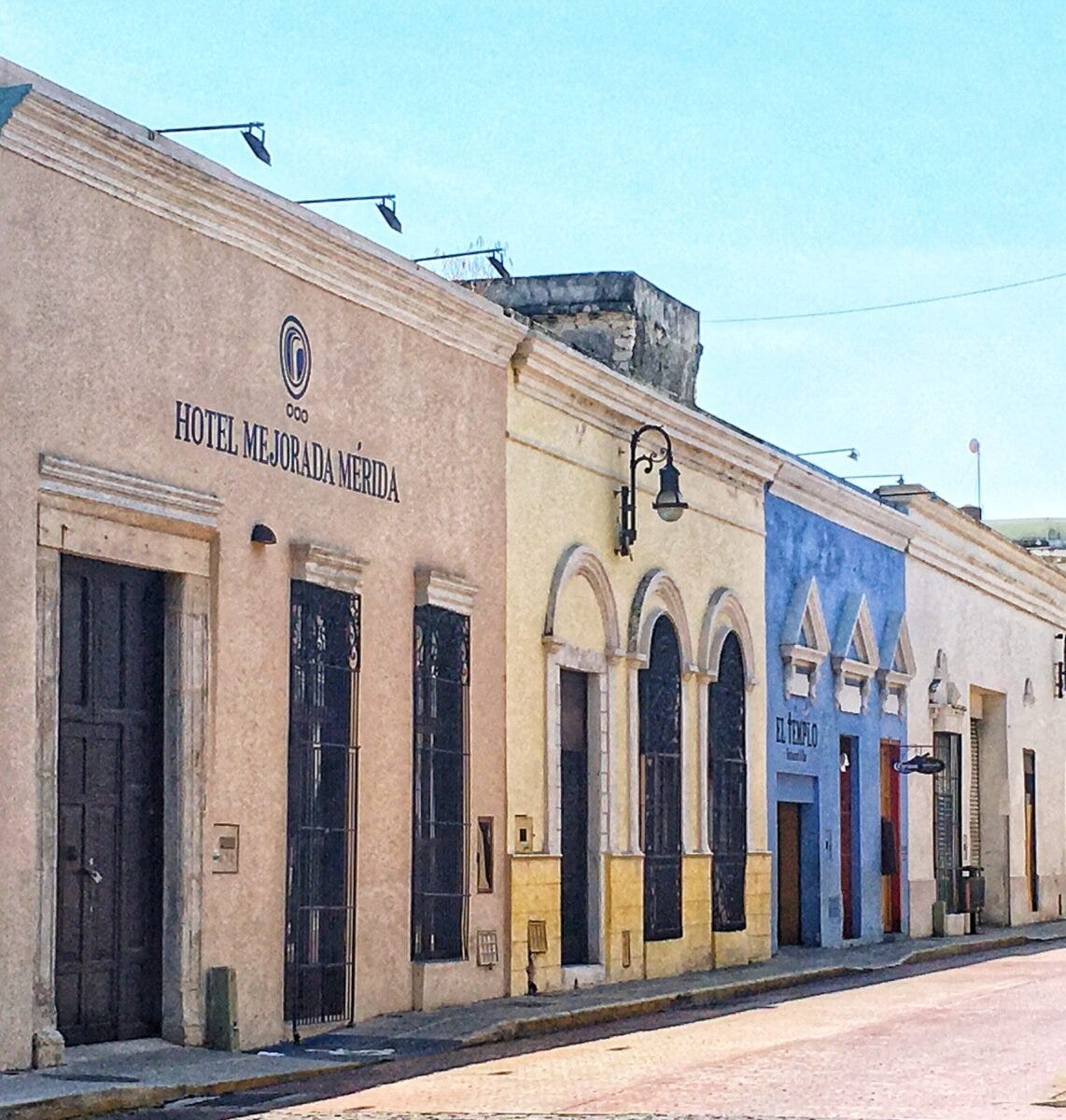
San Cristóbal — Calle 50 y Calle 69
In the 1540s, Francisco de Montejo set this area aside for the central Mexican allies who’d helped him conquer the Maya. San Cristóbal Church, also called Our Lady of Guadalupe, was the last church the Spaniards built in the Yucatán, with its foundation laid in 1757.
For centuries, getting to San Cristóbal meant climbing a steep hill on a street known as La Calle del Imposible (The Street of the Impossible). Five cultures have made this colonia home: Maya, Mexican, Spanish, Mestizo, and Arab. Lebanese immigrants in particular settled here, and at one point San Cristóbal reportedly resembled a small slice of Beirut or Damascus. Two staples of Yucatecan cuisine, the tortilla and the kibi, have roots in this neighborhood.
The church’s recessed shell archway echoes the Cathedral on Plaza Grande and the church in Umán. Climb the 129 steps of the interior stairway for a view of the neoclassical stone retablo. Above the entrance, the Latin inscription reads: “This is the House of God and the Gate of Heaven.”
Annual highlight:
Virgin of Guadalupe Celebration: December 12.
García Ginerés — Calle 20 y Calle 23
Once the Hacienda Datil y Limón (Date and Lemon), this land was purchased by Don Joaquín García Ginerés, who lent it his name. The streets are wide and lined with houses spanning every aesthetic including art deco, neo-Maya, colonial, European, modern. Most are less than 50 years old.
The crown jewel is Parque de las Américas, designed in a striking Neo-Maya style (the same style you’ll see at the Monumento a la Patria). Monuments throughout the park honor every country in North and South America. There’s a large fountain, an open-air half-shell auditorium called the concha, the José Martí Cultural Center, and a fenced children’s play area.
Local rumor: there’s a cenote underneath the concha. The park hosts cultural events, concerts, and athletic celebrations on weekends. The neighborhood church, Our Lady of Fátima, is a quiet stunner featuring art deco architecture and gorgeous stained glass.
Saturday morning ritual:
Slow Food Market: 9 a.m. to 1 p.m. Part of the global Slow Food network. Regional, organic, and built around culinary tradition. Arrive early as many vendors run out by noon. Bring your shopping bags.
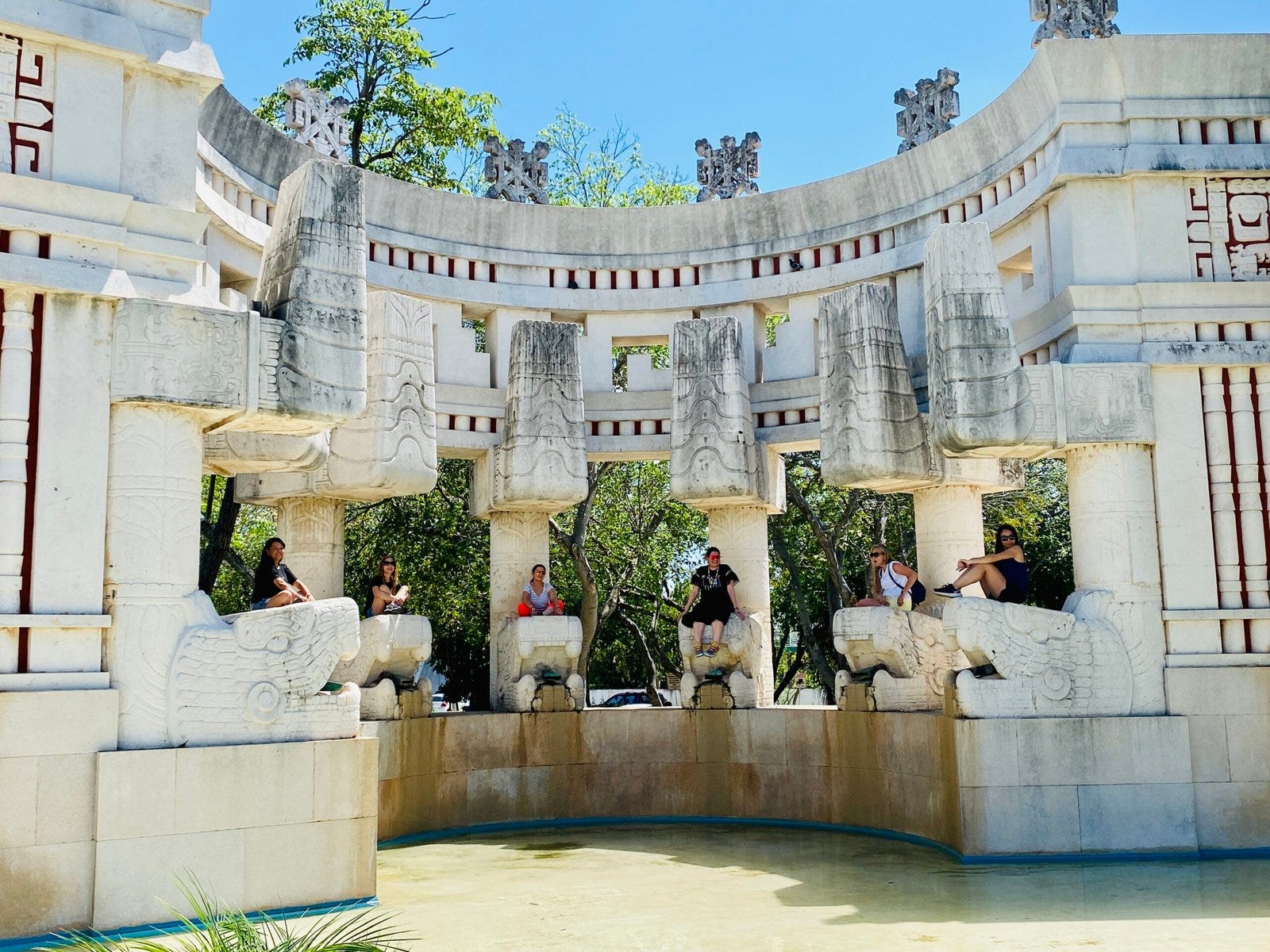
Centenario — Avenida Itzaes y Calle 59
The area surrounding the Parque Zoológico del Centenario was originally the Barrio de Santa Catarina, part of greater Santiago. For a long time, it was a humble neighborhood; a place that sheltered those the city had pushed to its edges.
The zoo itself was built as part of a national project under Porfirio Díaz in the early 1960s, connecting to the adjacent Parque de la Paz. The streets behind the zoo remain genuine, working-class Mérida. There’s no central market, but several grocery stores nearby.
A Few More Neighborhoods in Mérida Worth Knowing
To round out our tour of the neighborhoods in Mérida, here are a handful more. They are short on space, big on character. (Zip codes included for easy navigation.)
Itzimná — Calle 15 y Calle 20 (97100). Originally a separate Maya village on Mérida’s northeastern edge. The colonial chapel here is a favorite for weddings and locals love its charm. Don’t miss the famous Wayan’e taco stand.
Alemán (Miguel Alemán) — Calle 21 y Calle 26 (97148). Built in 1957 as one of Mérida’s first planned developments, named for the sitting president. Federally funded for workers, and one of only two colonias in the city with a sewer system. The other one is Las Americas outside the Periferico. It was also the first neighborhood to get city water.
Jesús Carranza — Calle 41 y Calle 28 (97109). A small colonia tucked next to Itzimná and Alemán. Wednesday nights bring the tianguis which are traditional pre-Hispanic markets, the Mexican equivalent of a flea market.
Chen Bech — Calle 57 y Calle 42 (97000). The name means “bird’s nest.” Site of Yucatán’s original brewery, built in 1900, eventually sold to Grupo Modelo, and closed in 2002. The Chen Bech Mercado is one of the city’s best and is beloved by locals and expats alike, with a great tianguis.
Chuburná — Calle 29 y Calle 14 (97205). Not to be confused with the beach town, Chuburna PUERTO. The name means “house of yellow cotton.” It had its own government in the 1940s and was the largest ejido (community-owned land) in Mérida. The church is one of the city’s oldest, and the Sunday flea market is fantastic.
Chuminópolis — Calle 27 y Calle 20 (97158). The name combines “Chumin” (a nickname for Domingo) and “polis” (Greek for city). This was Mérida’s Chinese district, settled by railroad workers. Don’t miss Quinta el Olvido (House of Forgetting), built at the end of the 19th century by Rafael Quintero, the engineer who paved Mérida’s streets.
La Plancha — Calle 43 y Calle 48 (97000). If you follow Mérida’s development at all, you’ve heard about La Plancha. Since 1995, the city has been trying to convert this abandoned railway station into a major public park. It finally happened and it’s spectacular. Areas with play equipment, a skate park, pet area, man-made pond with fountain, performance shell with free events, and more.
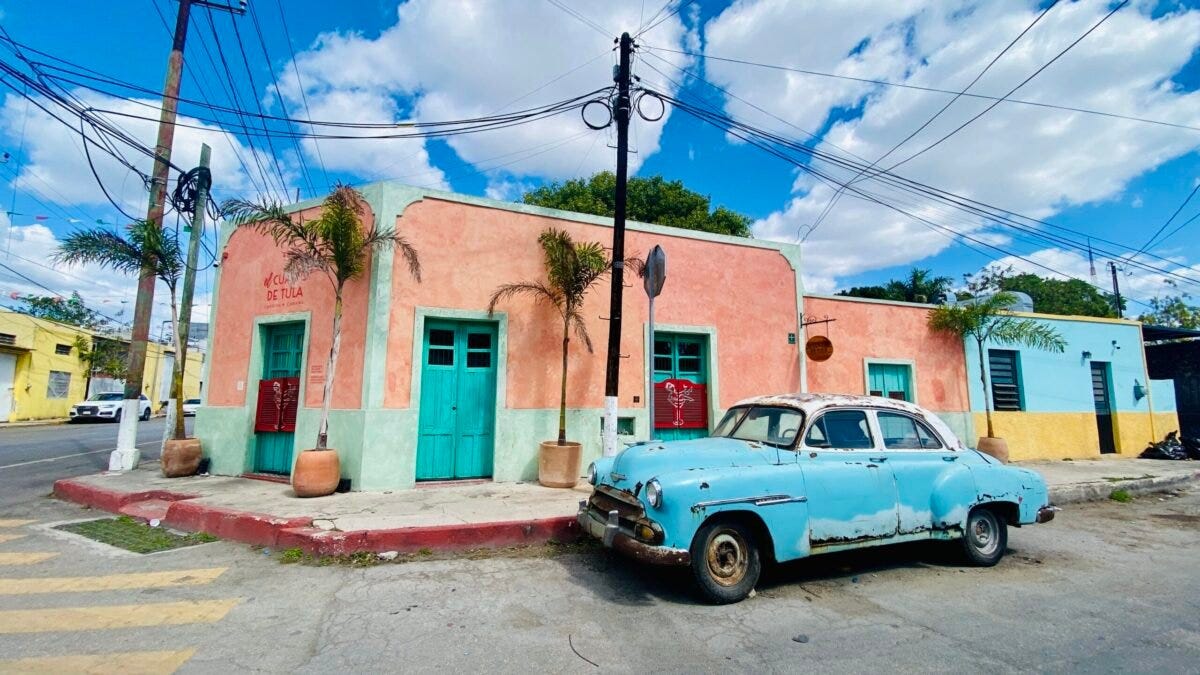
“The North”: A Different Kind of Mérida
Since the second half of the twentieth century, Mérida has expanded dramatically northward. The North (as everyone calls it) is where you’ll find the most commercial growth, newer homes, shopping malls, hospitals, private schools, car dealerships, and global franchises.
Some of The North is genuinely affluent. This is where many of the city’s wealthier residents live. As you drive up Prolongación de Montejo from Centro, prepare for a bit of culture shock. Some longtime expats compare The North to the San Fernando Valley in Los Angeles, or to suburban Phoenix.
It’s also closer to the beach, about a 20-minute drive, which is a huge draw.
The Best Northern Neighborhoods in Mérida
Montecristo · Montebello · San Ramón Norte · Montes de Amé · Altabrisa · Benito Juárez Norte · Francisco de Montejo · Campestre
For shopping, look for Altabrisa, City Center, La Isla, Galerías, and The Harbor; all spread across The North.
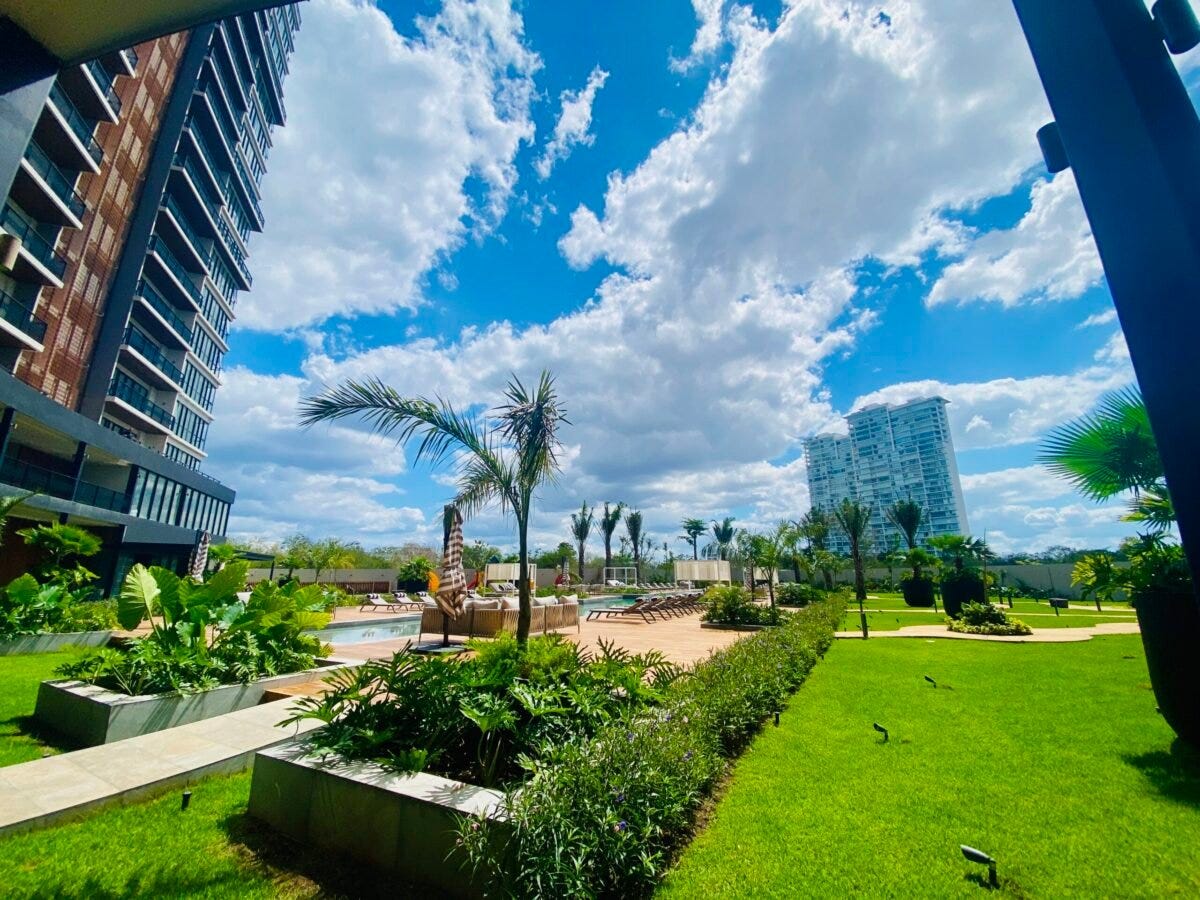
Final Thoughts on the Neighborhoods in Mérida
What makes the neighborhoods in Mérida so special isn’t any single colonia or fraccionamiento. It’s the way they all coexist. Centuries-old churches a few blocks from sushi restaurants. Wrought-iron balconies next to glass-fronted galleries. Sunday flea markets a short drive from shopping malls.
Each of the neighborhoods in Mérida tells its own story, and the longer you stay, the more those stories layer on top of one another. Walk the streets. Talk to the locals. Sit in the parks. The boundaries between colonias are blurry. But the people who live in them will gladly tell you where one ends and the next begins. Usually with a great story to go along with the answer.
Welcome to Mérida. You’re going to love it here.
Your Mérida Insiders,
Amy Jones, The Mérida Ambassador
Angel Rodriguez, The Local Insider
Founders, Life in Mérida™
Planning your next trip? Download our Free Visitor’s Guide to unlock insider itineraries, maps, and local secrets. Visit our website and find more articles on our Substack channel
