
Local Scam or Bad Decision Making? Let’s Be Honest.
Every week, I hear from someone who got burned. Most expats won't admit fault for bad decision making. Before calling it a scam, find out if due diligence could have been the solution.

Let me start with something that might sting a little. Every week, I hear from someone who got burned. A contractor disappeared with their deposit. A real estate deal went sideways. A trusted vendor delivered shoddy work, took the money, and stopped answering their phone. And the first thing out of their mouth is, “I got scammed.”
Maybe. But sometimes — more often than people want to admit — it wasn’t a scam. It was a bad decision.
There’s a difference, and it matters.
The English-Speaking Trap
Here’s something I noticed early on when I moved here from Dallas. Unfortunately, I see it play out constantly in the expat community. The moment someone hears English, their guard comes down completely.
I get it. You’re in a new country, navigating a new language, a new culture, and a new set of rules. When someone walks up and speaks to you in perfect English — or even decent English — it feels like finding a life raft. Suddenly you trust them. You relax. You assume a shared cultural framework that simply does not exist.
Even I wasn’t immune. It happened to me in my first few weeks here and I got scammed big time by a “Spanish” teacher who wanted 100% payment up front. Just a few weeks after our lessons started he skipped the country never to be heard from again.
Just because someone speaks English does not mean they operate by U.S. or Canadian business norms. It doesn’t mean they understand — or care about — your expectations around contracts, timelines, deposits, or follow-through. And it absolutely does not mean they are honest.
This is one of the most expensive assumptions you can make in Mexico.
The Due Diligence Problem
Would you hand $5,000 to a contractor back home without a signed contract, references, or a Google search? Of course not. So why are people doing exactly that here?
I’ve had consultations with people who gave a full deposit upfront to hold a rental property by someone they met in a Facebook group. No contract. No references checked. No verification that this person actually owned the house. Just a friendly conversation, a WhatsApp number, and a promise.
When the local vanishes — and sometimes they do — is that a scam? Yes. But was it also entirely avoidable? Also yes.
Vetting someone here looks different than it does back home, but it is absolutely possible. Ask for references and actually call them. Look at completed projects on social media and verify they are projects performed and completed by the company or person you want to hire. Understand that paying 100% upfront for anything is not standard — a reasonable deposit for contracted work is typically 30% to 50% maximum, with the remainder tied to milestones or completion. Google their name, check in the Scams and thefts in Yucatan or Scams in The Yucatan.
Get something in writing, even if it’s not a formal legal contract. A written WhatsApp agreement with clear terms is better than a handshake and a smile.
If the vendor needs money to buy materials upfront to start the project, go with them to make sure what they purchase is for your project and not something else they have going on the side.

Real Estate: Where the Stakes Are Highest
Real estate is where I see the most heartbreaking situations. People fall in love with a property, move fast, skip steps, and end up in situations that could have been avoided entirely.
Some things to understand about buying property in Mexico:
Foreigners cannot directly own property within 50 kilometers of the coastline or 100 kilometers of a national border. If you’re buying near the beach or in a restricted zone, you need a Fideicomiso — a bank trust that holds the property on your behalf. This is not optional, and anyone telling you otherwise is either misinformed or not someone you want handling your purchase.
Title searches matter enormously here. Ejido land — communal agricultural land — cannot be privately owned, and there is a lot of it. If a deal seems suspiciously cheap for what you’re getting, that’s a reason to dig deeper, not a reason to celebrate.
Working with a licensed Notario Público (a Mexican notary public, who holds significant legal authority here — far more than a notary in the U.S.) and a reputable real estate attorney is not a luxury. It is the cost of doing business safely. Yes, it adds expense. No, it is not negotiable if you want real protection.
The agents showing you properties are not always licensed, and there is currently no universal, enforced licensing standard in the Mexican real estate industry the way there is in the U.S. Anyone can call themselves a real estate agent. Vet them as hard as you vet the property itself.
The “Gringo Price” Conversation Nobody Wants to Have
I’ll say the quiet part out loud: gringos created the gringo price problem.
One day Angel and I were driving through Centro making a list of shops to avoid that we could share with our clients. In his patient wisdom, he said, “Mi amor, you know that gringos are to blame for gringo pricing - right?” “What? Explain that to me, please.” I asked.
He said, “Many times gringos enter a store, look at something they are interested in and say, ‘Wow, this is cheap!’ Over time, the store owner learns that cheap means they can charge more to gringos. After all, shop owners want to capitalize on tourism just as much as anyone else. So, they raise the prices . . . resulting in gringo price.”
Taking a moment to digest this information, I realized this is, in fact, completely true. Unfortunately, some gringos take this really seriously and think they are getting gringo priced on everything. We recently had some scouting trip guests complaining they got gringo priced at the local fruteria. I asked him what he bought so I could understand better. He bought grapes (frequently imported and ALWAYS expensive, limes (during Easter the price increases astronomically - don’t know why), and HASS avocados (these are always more expensive than local avocados - you pay for luxury).
He paid $220 mxn - about $11 usd at the time and thought it should have been closer to $80 mxn - about $4 usd. When I told him it would have been closer to $300 mxn or about $15 usd in a regular grocery store, he still wasn’t convinced. I think you get the point that his mentality and expectations of pricing were not even reasonable. Instead of researching pricing in other stores, he automatically jumped to the conclusion he got ‘gringo priced’ - not a good look.
And then, you’ll see people complain about it in Facebook groups, relentlessly.
The local economy here is not the U.S. economy. The cost of materials, labor, and services reflects local wages and local purchasing power. When you arrive with a U.S. salary or retirement income and throw money around without understanding the actual going rate for something, you are not being generous — you are being uninformed. And with that uninformed perspective, comes consequences for every gringo who follows.
This doesn’t mean you should lowball or disrespect workers. After all, negotiation is NOT A THING here and it is disrespectful to do so unless it is a special circumstance such as a bulk purchase AND you speak fluent Yucatecan Spanish. This means you should do your homework. Ask multiple people what something costs. Talk to long-term residents before agreeing to prices. Understand what “expensive” and “reasonable” actually mean in a local context.
We NEVER use the word cheap - we always use the word affordable.
Cultural Expectations Are Yours to Manage, Not Theirs
This is probably the most important thing I can say, so I want to say it clearly.
Mexican business culture operates differently than American or Canadian business culture. This is not a flaw. It is simply a difference that you are responsible for understanding when you choose to live here.
Time works differently. Agreements are often more relationship-based and less contract-based. “Yes” sometimes means “I don’t want to disappoint you right now” rather than “I will definitely do this.” Hierarchy matters. Relationships matter more than paperwork. And directness about problems is not always the immediate default — which means you sometimes have to ask more questions and follow up more actively than you would at home.
Expecting a local contractor, vendor, or service provider to anticipate your cultural norms and meet them automatically is not a reasonable expectation. Adapting to how business is done here — while still protecting yourself with reasonable safeguards — is your job.
Protecting Yourself: The Short List
I could write a book on this (and honestly, that’s not a bad idea). But here’s where to start:
Before you hire anyone: Ask for at least two to three references from completed jobs. Actually contact them. Ask long-term expats in trusted community spaces — not just open Facebook groups — who they’ve used and what their experience was. If possible, see completed work in person or at a minimum photos.
Before you pay anyone: Never pay 100% upfront for anything. For larger projects, structure payments around milestones. Get the scope of work in writing — even a detailed WhatsApp message counts. Keep records of everything.
Before you buy real estate: Hire a reputable Notario Público and a qualified real estate attorney. Do a full title search. Understand what type of land you’re buying. Work with agents who have verifiable references and a track record in the area.
Before you assume you were scammed: Ask yourself honestly whether you followed reasonable precautions. Sometimes the answer is yes, and you were genuinely taken advantage of — and that’s real, and it happens, and I’m sorry if it happened to you. But sometimes the answer is that you moved too fast, trusted too easily, skipped steps you knew you should take, and paid the price for it.

The Bottom Line
Living in Mérida is genuinely wonderful. The people are warm, the culture is rich, the food is extraordinary, and for most people, the day-to-day experience here is safe and deeply rewarding. I would not have uprooted my life and moved here if I didn’t believe that with every part of me.
But no city, no country, no community is without its bad actors. And the best protection you have against them is not suspicion — it’s preparation.
Do your homework before you arrive. Keep doing it after you get here. Ask questions. Build real relationships with long-term residents who know the landscape. Hire the professionals who exist precisely to protect you from costly mistakes.
You moved — or are moving — to a different country. That takes courage. Now match that courage with the diligence to do it right.
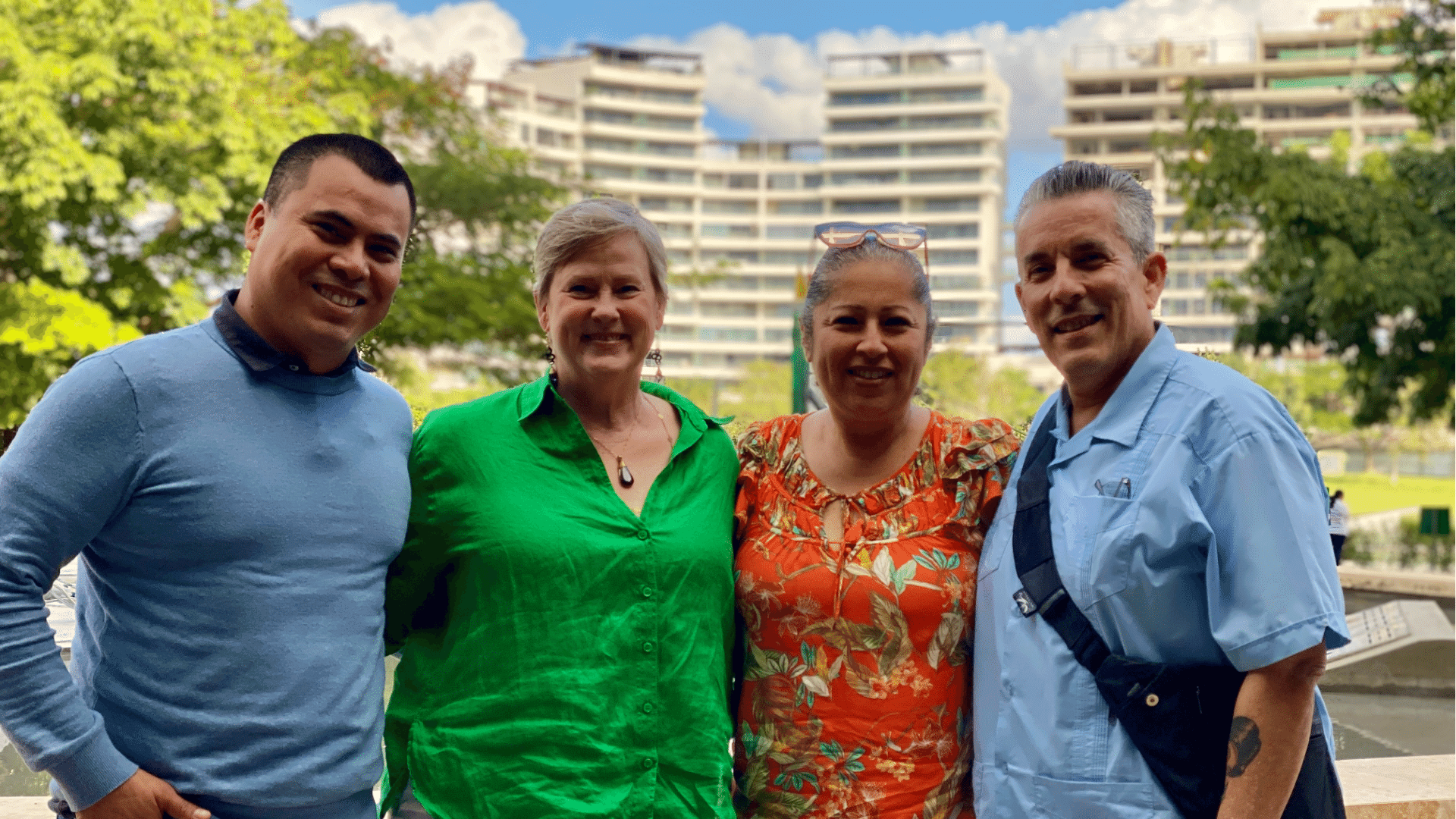
Have questions about navigating real estate, contractors, or life in Mérida? That’s exactly what our consultations are for. Book a 15-minute complimentary consult here.
Want more real talk about expat life? Subscribe to The Mérida Ambassador on Substack for weekly insights.
Yes, to all of this! Thank you.