

This is a frequently asked and googled question. People who have finally decided Mérida might be the place, but who don’t want to trade one set of problems for a worse one. The possibility of a Category 5 knocking on the door every season.
So here’s the honest answer from someone who actually lives here and has sat through a few storms with the windows taped up.
Yes, hurricanes are part of life in the Yucatán. No, Mérida is not Cancún, Cozumel, or Houston. The risk is real, but it’s meaningfully different from what you’d face on the coas. 2024 gave us a very clear reminder of both sides of that coin.
Let me walk you through what I’ve learned.
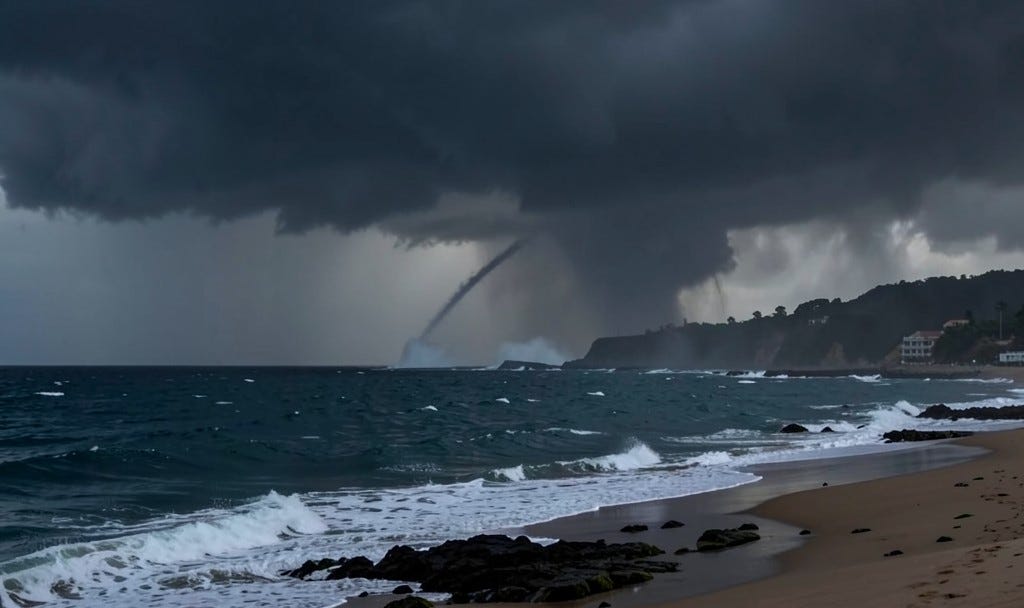
What Actually Counts as a Hurricane
A hurricane is a tropical cyclone with sustained winds of 74 mph (119 km/h) or more. They form over warm ocean water, roughly 79°F (26°C) and above.This is why the Caribbean and Gulf of Mexico are such reliable breeding grounds from summer through fall.
The three things that cause damage, in order of importance for inland Mérida:
Torrential rain and the flooding that follows
Wind damaging trees, power lines, and anything loose
Storm surges which are a serious coastal threat but not a direct threat to Mérida itself
That third point matters more than people realize, and I’ll come back to it.
When Is Hurricane Season in Mérida?
The Atlantic hurricane season runs June 1 through November 30. In practice, the months you actually pay attention to here are August, September, and October. This is when Caribbean and Gulf waters are warmest and storms have the most fuel. Early-to-mid September is the statistical peak.
During those months, we keep an eye on the National Hurricane Center and Mexico’s Servicio Meteorológico Nacional. The rest of the year, life goes on.
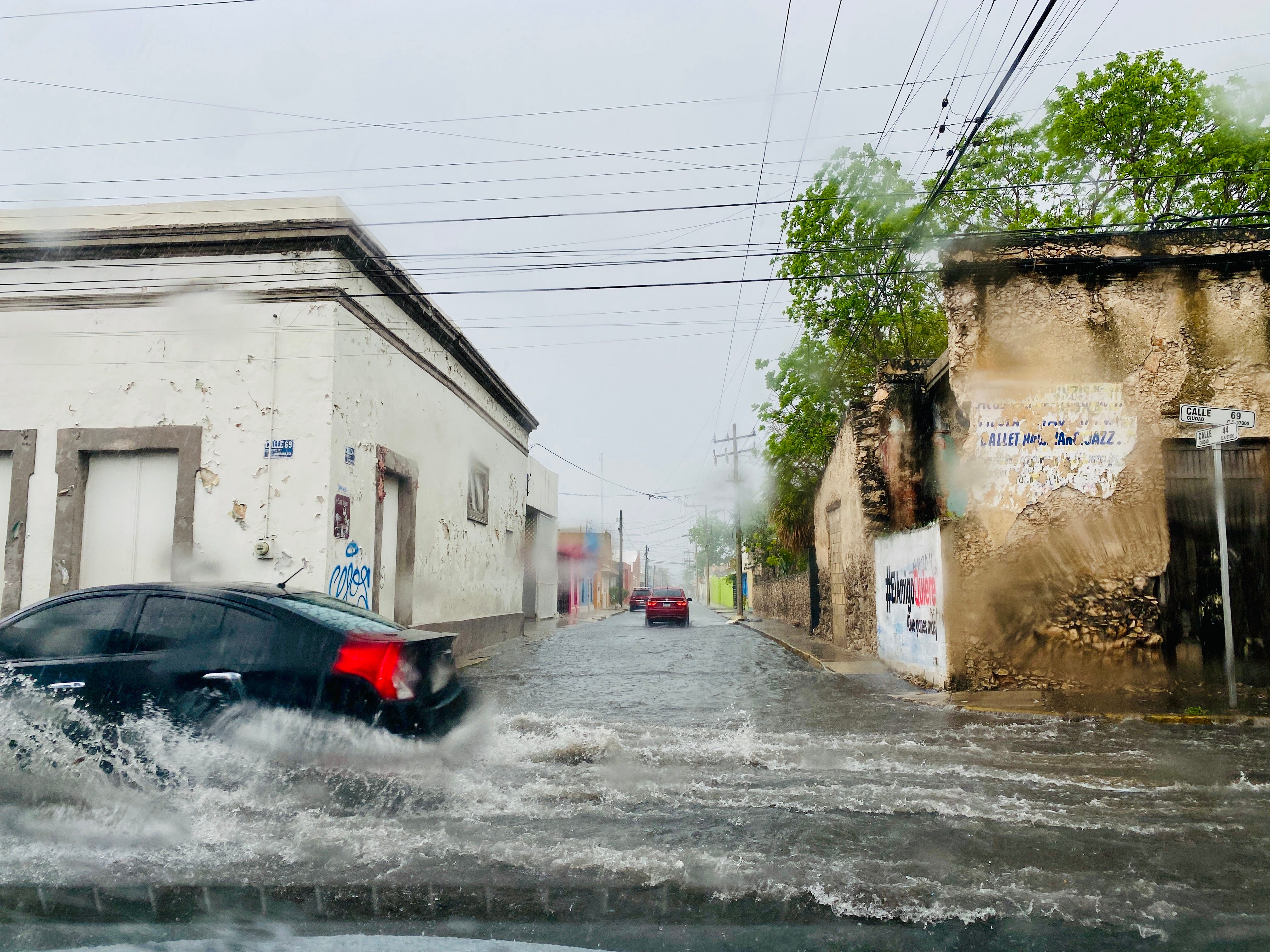
Where Mérida Actually Sits and Why It Matters
Here’s the piece most travel articles gloss over. Mérida is an inland city, roughly 35 km (about 22 miles) from the Gulf coast at Progreso. That distance doesn’t sound like much. But when a hurricane makes landfall, it starts losing power the moment it crosses land. By the time a coastal hurricane reaches Mérida, it has almost always been downgraded to a tropical storm.
Yucatán Magazine made the best analogy for tropical system risk here: Mérida is more comparable to Orlando, Florida than to Tampa or Miami. It’s inland and shielded, but not immune.
Coastal towns like Progreso, Celestún, Telchac, and Chuburná each face a different level of risk. If you’re thinking about a beach house, your calculation is not the same as it is in the city. As a rule of thumb, towns west of Progreso are more protected than towns east of it.
The Last Direct Hit: Hurricane Isidore, 2002
The last time Mérida took a direct hit with sustained hurricane-force winds was Hurricane Isidore in September 2002. This Category 3 hovered over the city for close to 30 hours. Trees came down everywhere, and many neighborhoods went without electricity or running water for weeks. Residents who lived through it talk about it the way people in New Orleans talk about Katrina; a reference point that divides before and after.
But here’s the key detail: even during Isidore, most homes in Centro Histórico came through with structural integrity intact. Broken windows, fallen trees, and long power outages, yes. Collapsed houses, overwhelmingly no. That’s because the older colonial homes here are built of stone and thick masonry. Exterior walls run 20 to 30 inches (50–75 cm) thick with interior partition walls 12 to 18 inches (30–45 cm). They’ve been standing through hurricanes for 200-plus years and have no intention of stopping now.
The Recent Picture: 2020–2025
Between Isidore and today, the pattern has been mostly tropical storms bringing flooding, with one very close call in 2024:
2020 — Tropical Storms Cristobal, Delta, and Zeta hit back to back. The water table rose so high that water came up from below in some neighborhoods. This is still the year people bring up when they complain about flooding.
2021 — Tropical Storm Grace brushed the city, mostly rain.
2023 — A relatively quiet season for the peninsula.
2024 — Hurricane Helene made landfall on the Yucatán Peninsula as a Category 1 in late September: fallen trees, flooded streets, power outages, canceled flights, but a mild impact overall.
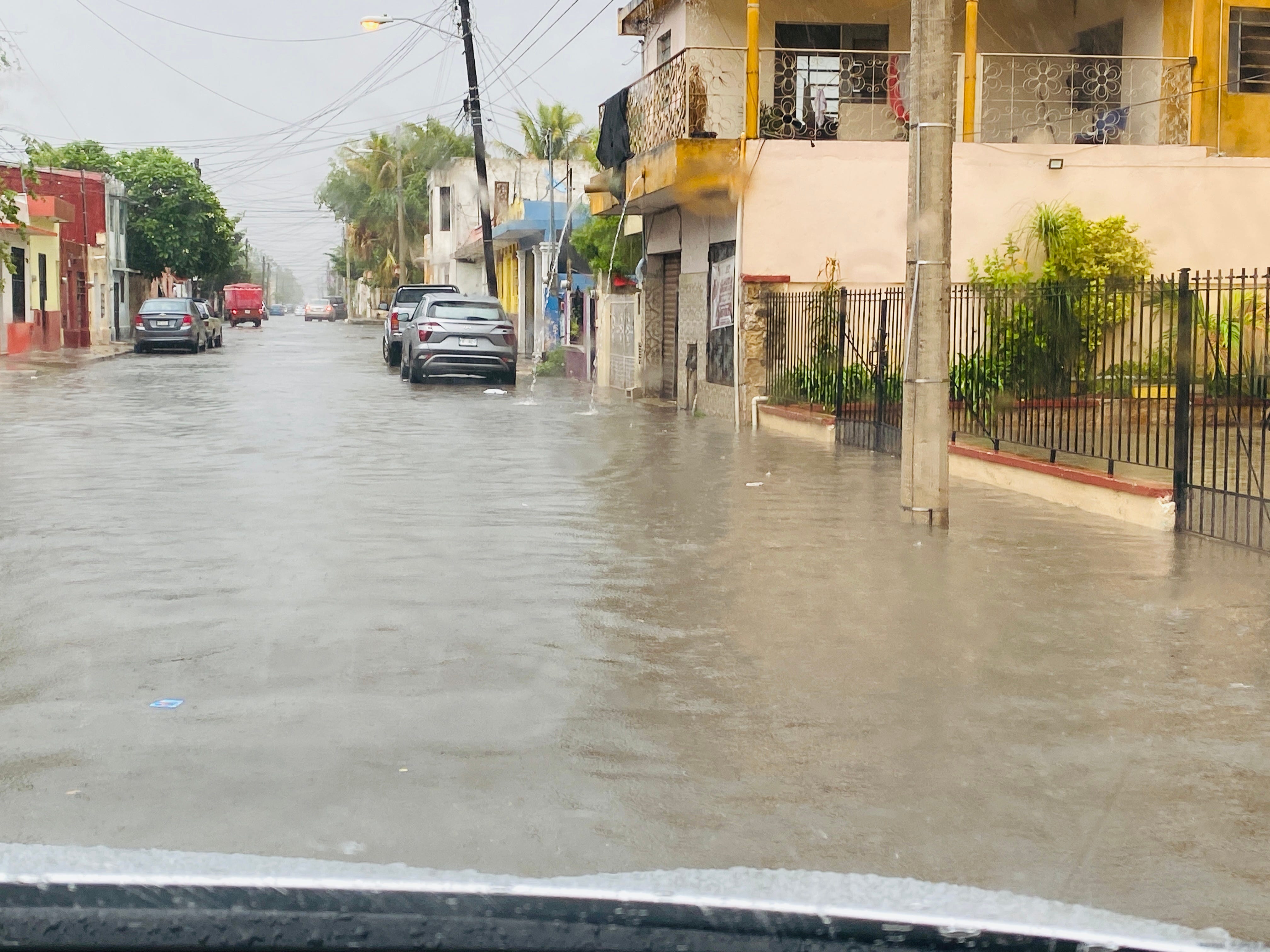
2024 — Hurricane Milton rapidly intensified from Category 3 to Category 5 in the Gulf. It grazed the northwestern Yucatán coast on October 7–8. Then, sent considerable rain and flooding as far inland as Mérida before curving toward Florida. The eye stayed offshore and we were spared a direct hit. There was panic buying, the U.S. Consulate closed, and flooding in Centro was significant.
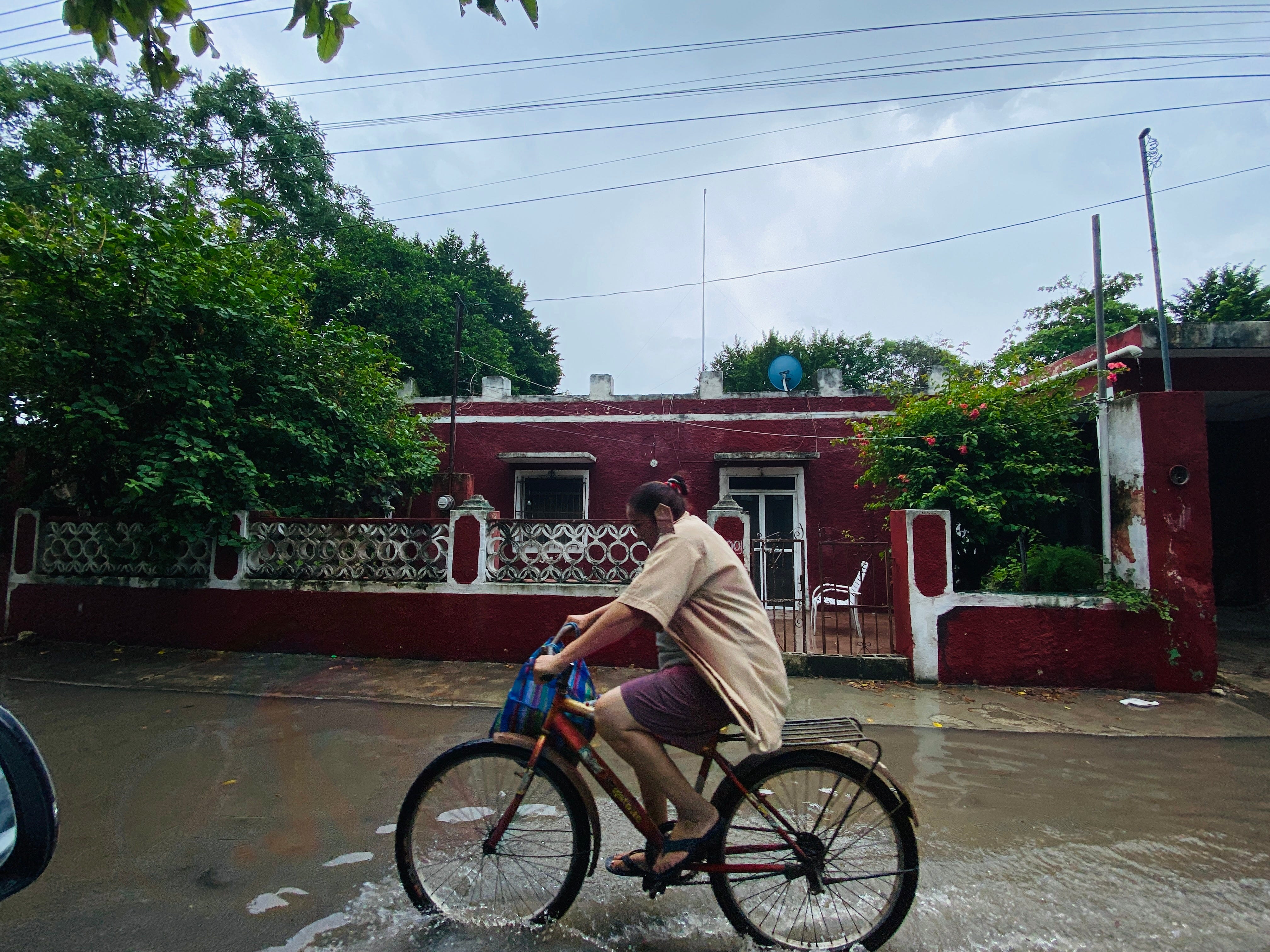
2024 — Separate from the named storms, multiple days of rain in late September flooded parts of Centro and adjacent colonias so badly that people abandoned stalled cars and walked home.
2025 — An unusually quiet season for the peninsula. For the first time in five years, we made it through without a named-storm impact.
No direct hurricane hit since 2002 is still technically true. But 2020 and 2024 are fair reminders that, according to locals, tropical systems can feel worse than a hurricane.
How Worried Should You Actually Be?
This is the part I want to be transparent about, because I think the real-estate brochures oversell the safety and the doom-scrollers oversell the danger.
What’s low-risk: a direct strike by a major hurricane at full strength (roughly once every 20-plus years, historically), and structural damage to a solid Centro home (rare, even during Isidore).
What’s worth preparing for: power outages that can last a few hours or a few days (and when the power goes, so does your water access), flooding in low-lying streets with poor drainage, and fallen trees such as chaká, mango, and flamboyán are the usual culprits. Take notice of any large old ones nearby before a storm.
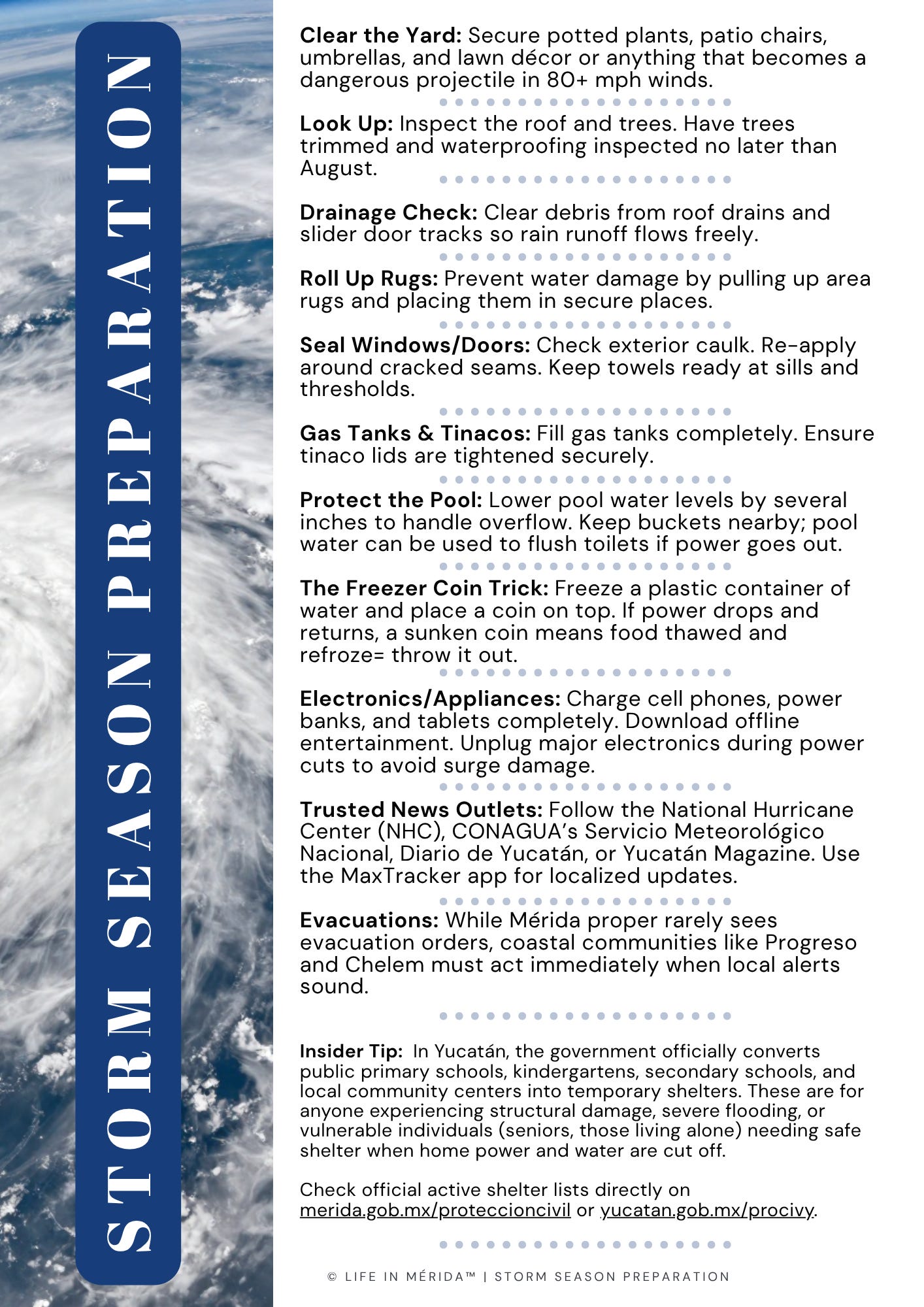
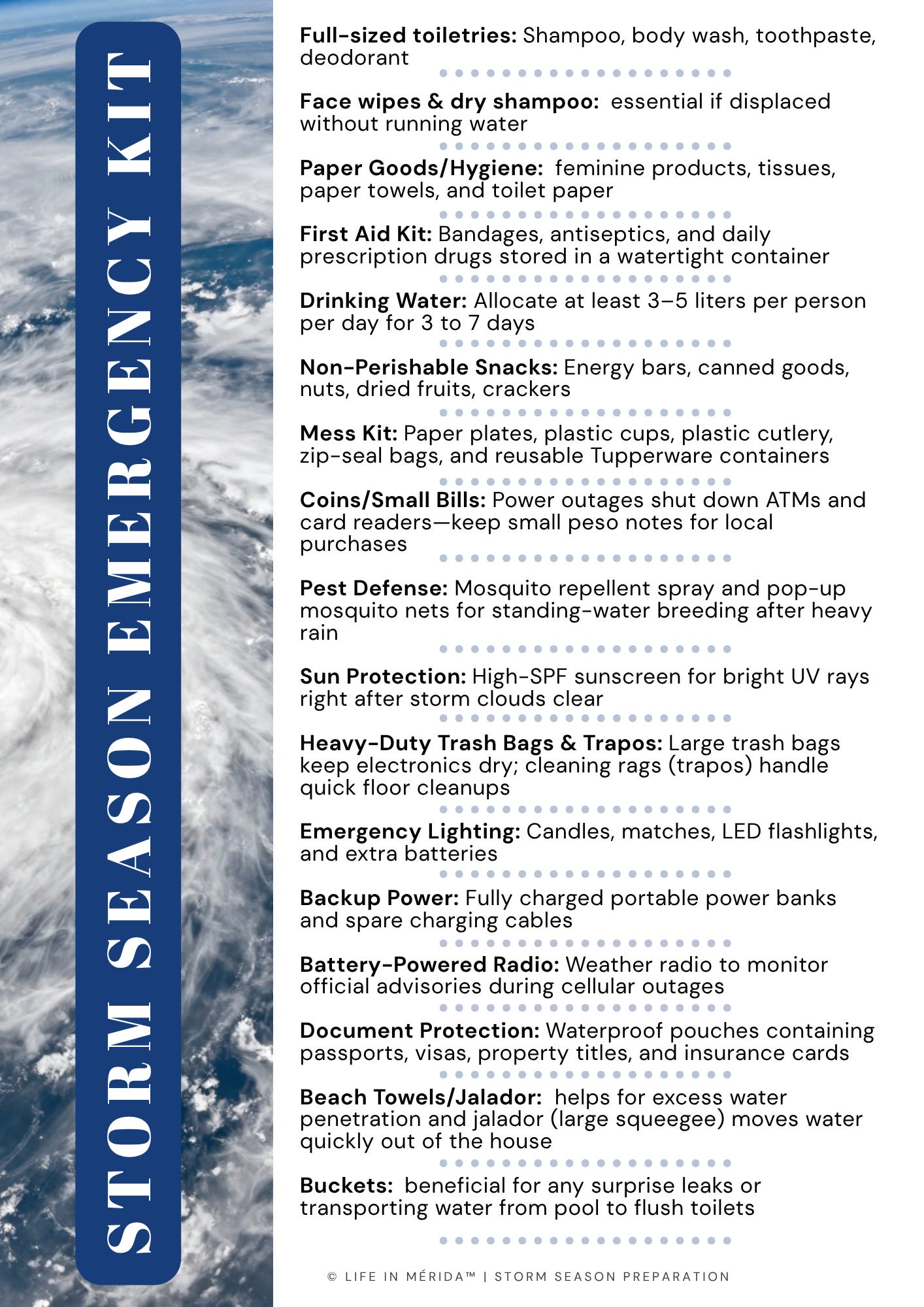
I’ve put together two infographics with the full breakdown (1) a storm-season prep checklist for your home and yard, and (2) an emergency kit list for what to actually stock. Between the two, you’ll have everything covered.

Should Hurricanes Change Your Decision About Moving to Mérida?
In my honest opinion, as a foreign resident who has lived through several seasons here: no, not by much.
The hurricane risk in Mérida is real but limited, historically manageable, and less severe than what you’d face in Cancún, Tampa, Houston, New Orleans, or most of the southern U.S. coast. The bigger day-to-day weather inconvenience here is actually the rainy-season flooding and heat, not hurricanes.
What should shape your decision is where in Mérida you plan to live, and how sturdy and well-drained that specific house is. That’s a conversation I have with every scouting-trip client.
FAQ: Hurricanes in Mérida, Mexico
Does Mérida get hurricanes?
Yes, but infrequently as direct hits. The last major direct strike was Hurricane Isidore in 2002. Tropical storms and hurricane-related rain events are more common than actual hurricane landfalls in the city.
When is hurricane season in Mérida?
Atlantic hurricane season runs June 1 to November 30. The highest-risk months for Mérida are August, September, and early October.
Is Mérida safer than Cancún from hurricanes?
Generally, yes. Mérida is inland, about 35 km from the Gulf coast, so storms usually weaken before reaching the city. Cancún and Cozumel sit directly on the Caribbean and face far higher storm-surge and direct-strike risk.
Did Hurricane Milton hit Mérida?
No. In October 2024 it grazed the northwestern Yucatán Peninsula as a Category 5 storm, with the eye staying offshore. Mérida saw flooding, heavy rain, and a temporary closure of the U.S. Consulate, but damage was relatively limited.
Do homes in Mérida’s Centro Histórico hold up in hurricanes?
The older colonial homes, with stone and thick masonry walls, have historically held up very well, including through Isidore in 2002. The more common issues are fallen trees, broken windows, long power outages, and roof or patio leaks rather than structural failure.
Should I avoid moving to Mérida because of hurricanes?
For most people, no. The hurricane risk is meaningfully lower than in many U.S. Gulf and Atlantic coast cities. The bigger things to factor into your decision are home quality, drainage, heat, and rainy-season flooding — all manageable with the right property.
Final Thoughts
Hurricanes in Mérida are part of the deal when you choose life on a tropical peninsula. So are afternoons that smell like limes and rain and mango, and Novembers so gentle you’ll text your old winter self in disbelief.
In 20-plus years, Mérida has taken one direct hurricane hit and a handful of scares. Most foreign residents I know would take those odds again tomorrow.
Your Mérida Insiders,
Amy Jones, The Mérida Ambassador
Angel Rodriguez, The Local Insider
Founders, Life in Mérida™
🧳Planning your next trip? Download our Free Visitor’s Guide to unlock insider itineraries, maps, and local secrets. Visit our website and find more articles on our Substack channel
essential-items-for-a-hurricane-safety-box
hurricanes-in-merida-mexico
Great article except...not all expats live in Centro. More and more are moving outside of it and mostly to the north. If as realtors you aren't showing people that, explaining the North options and lifestyle, you're not doing your job well.